SNFCC Readings
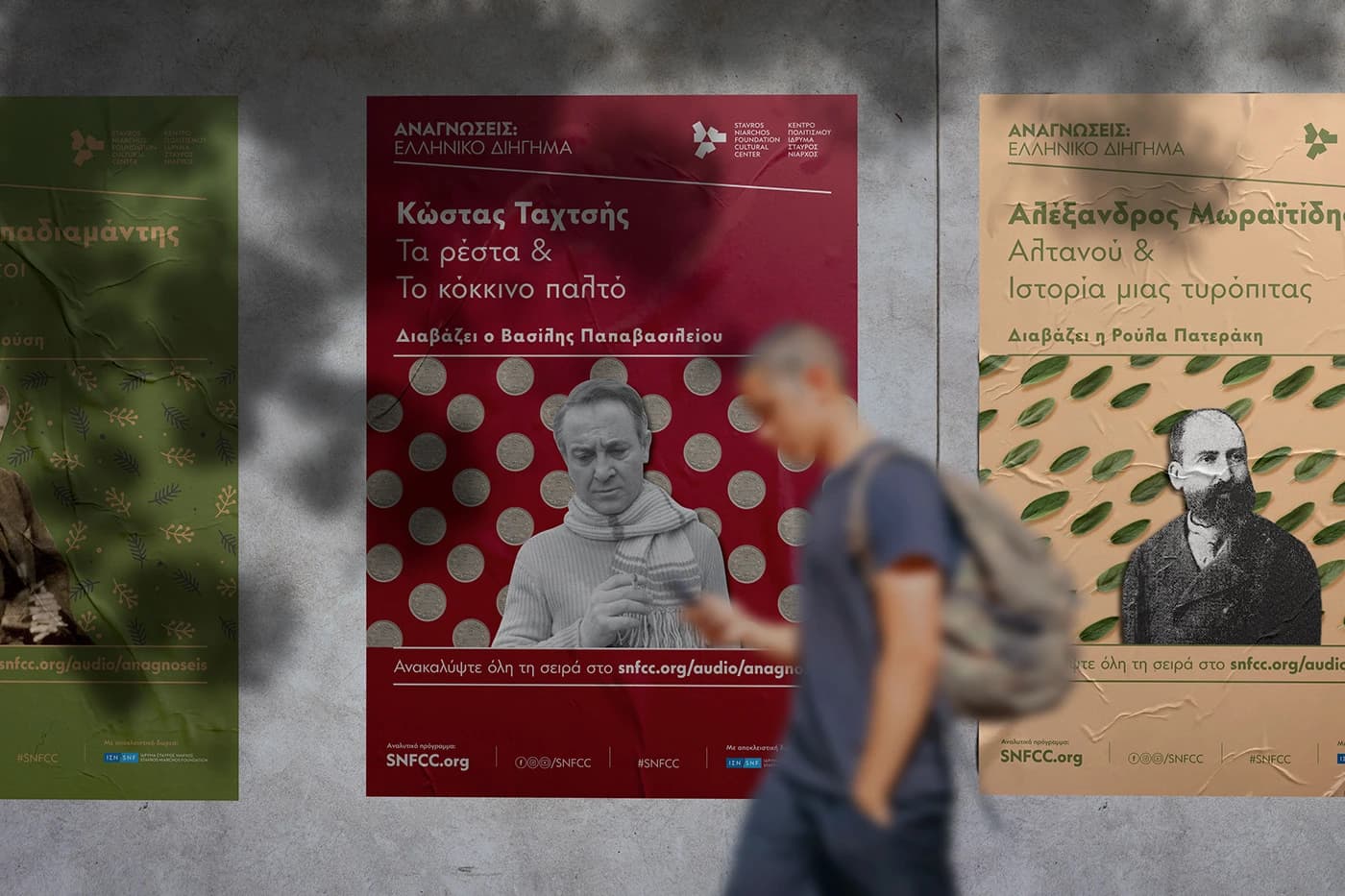
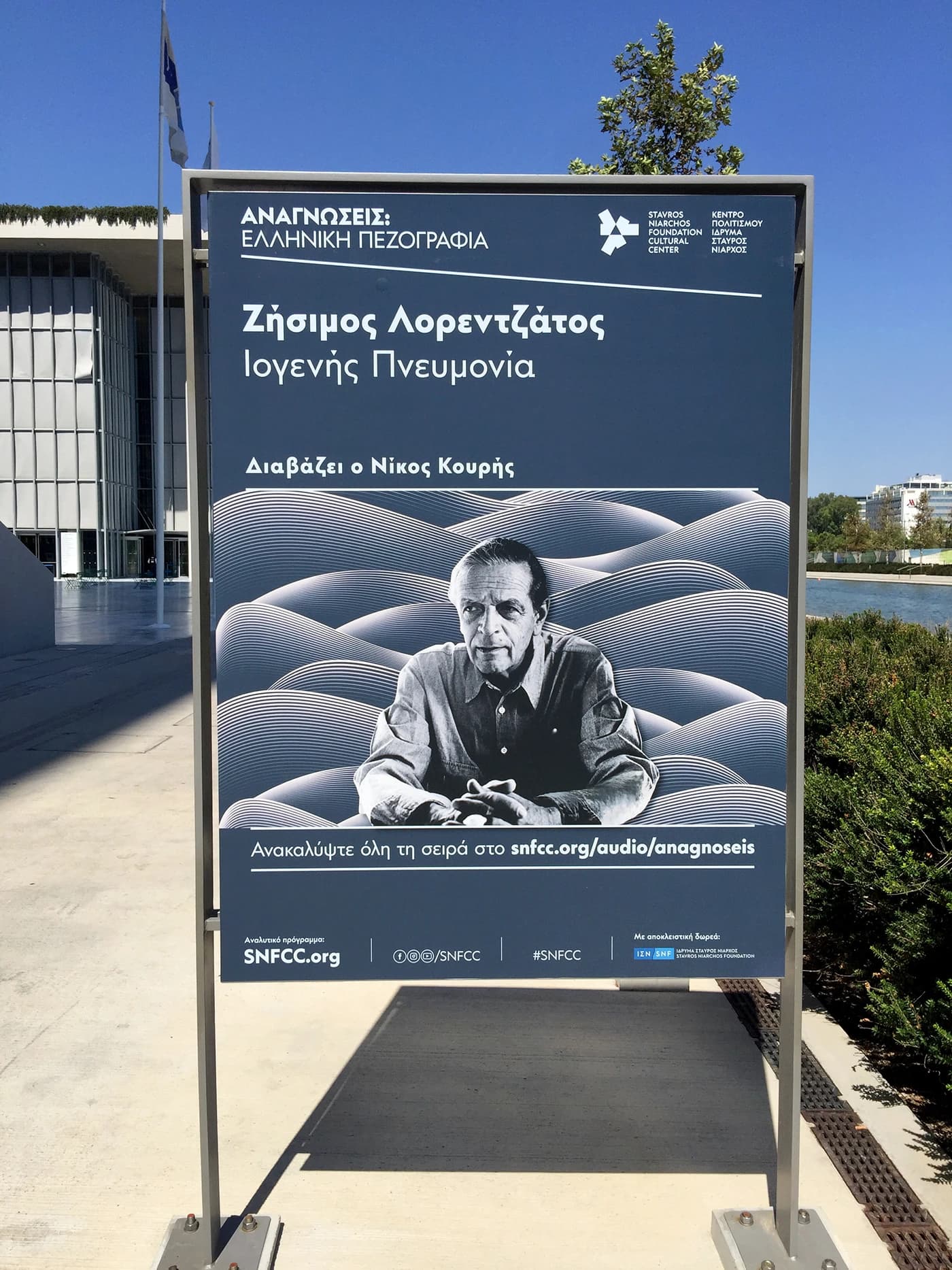
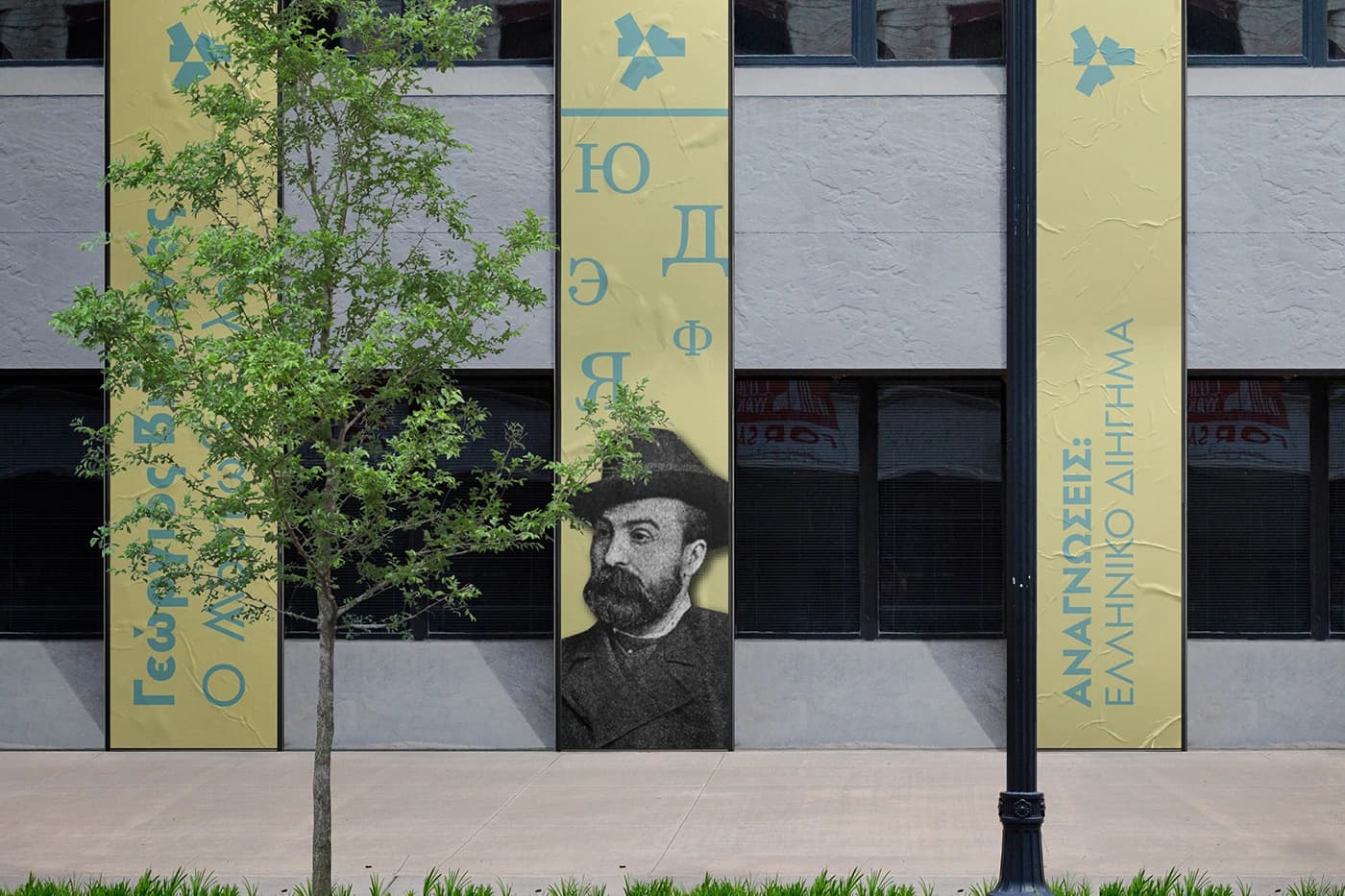
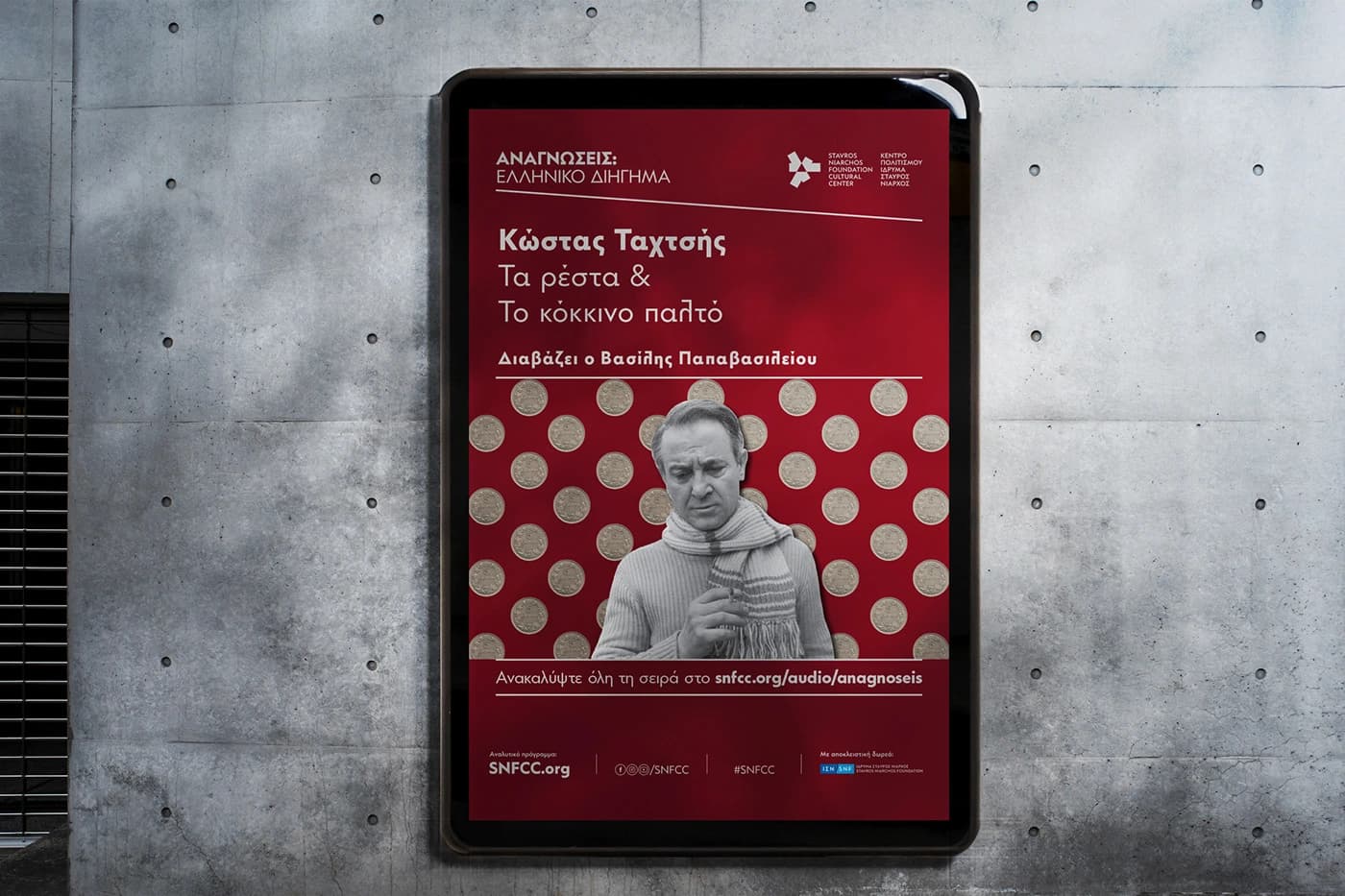
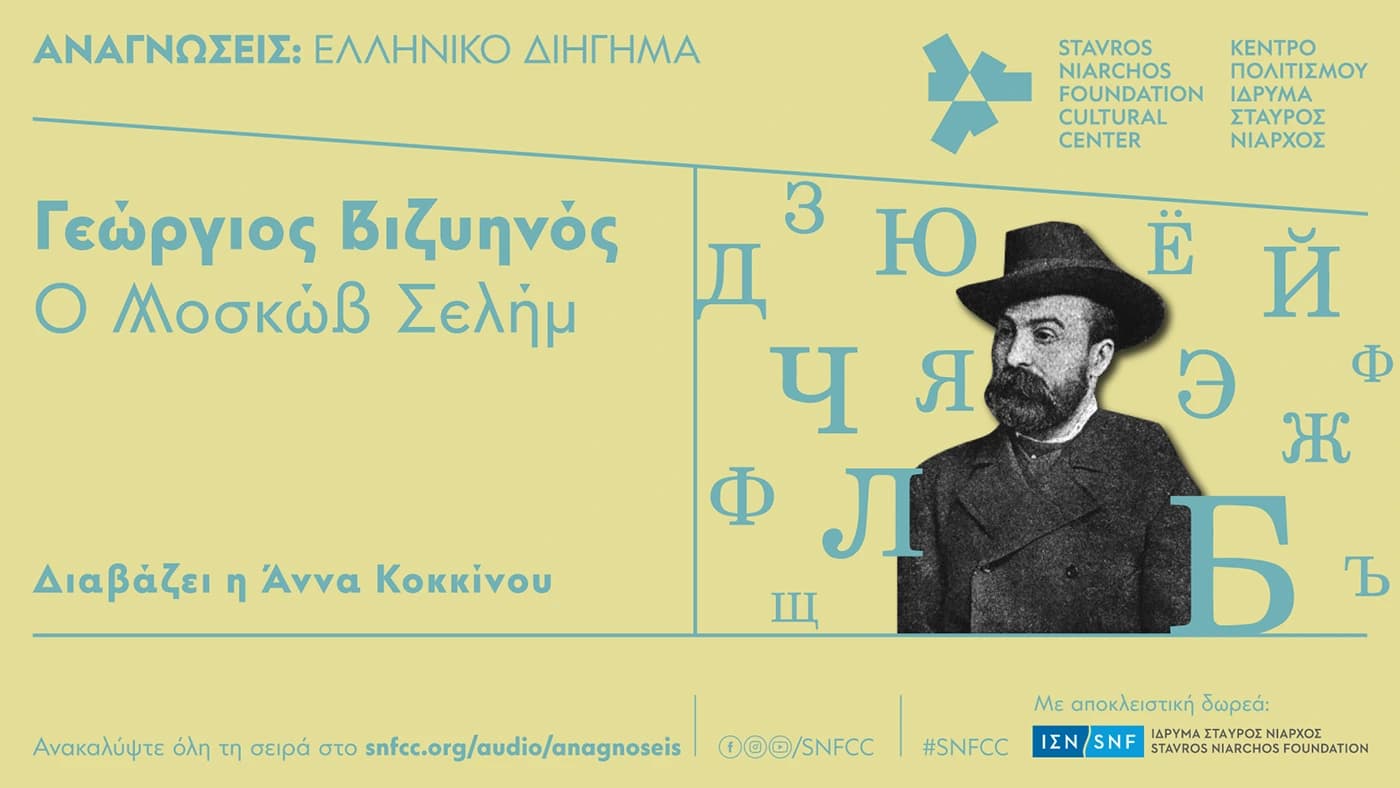
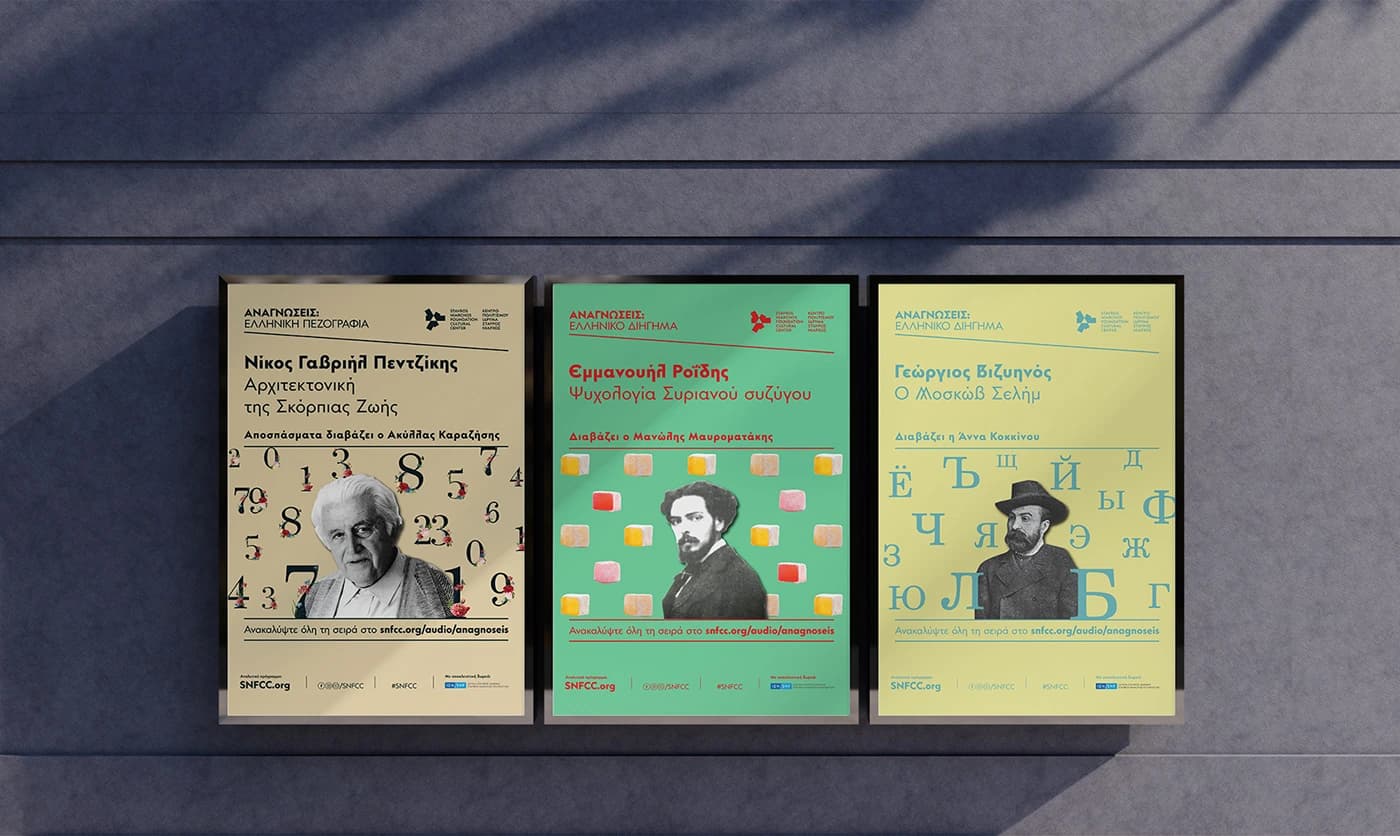
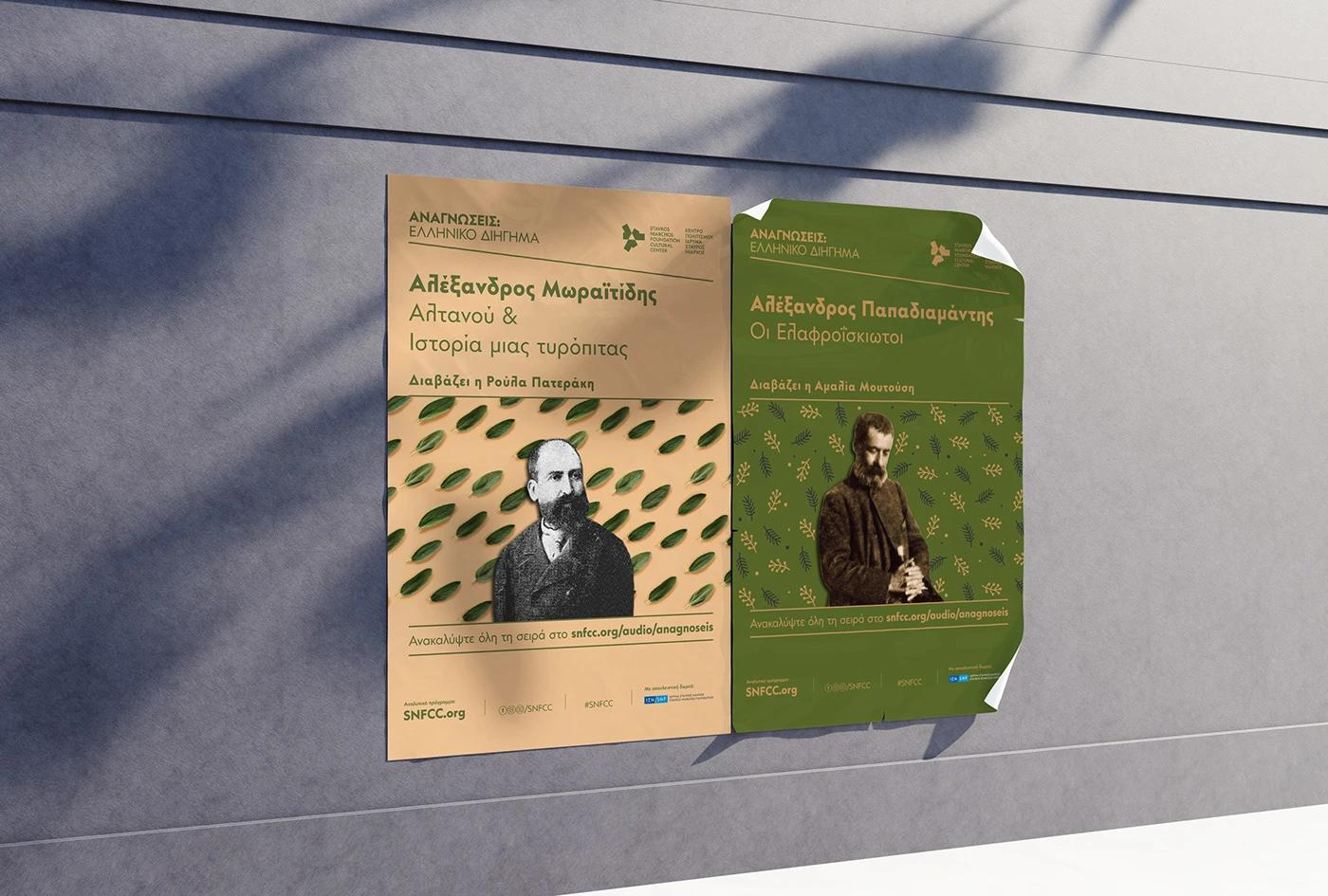
Eleven writers, eleven ways of seeing the world, so instead of stretching one identity over all of them I gave each reading a face of its own, drawn out of what that writer had actually written.
At a glance
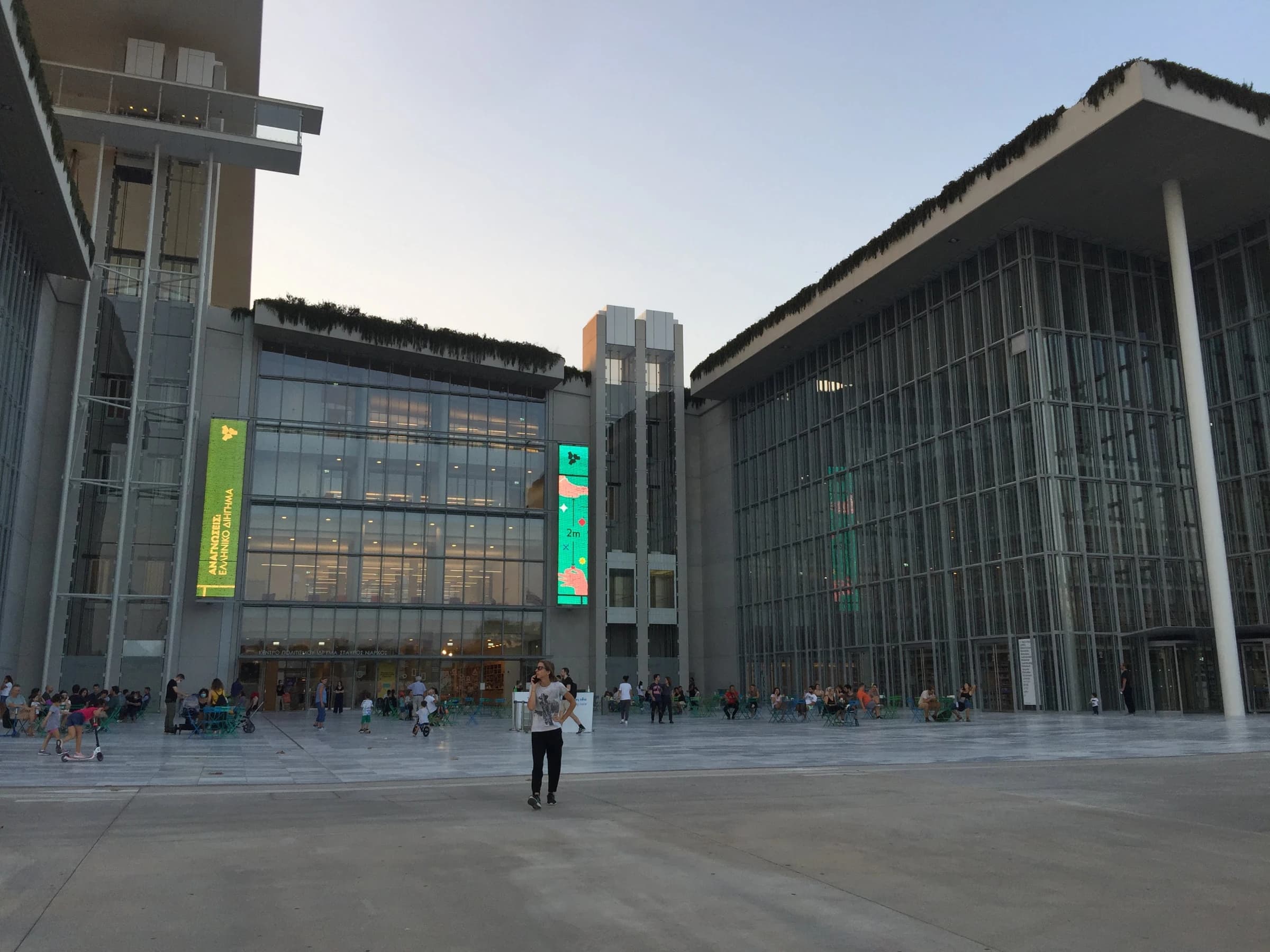
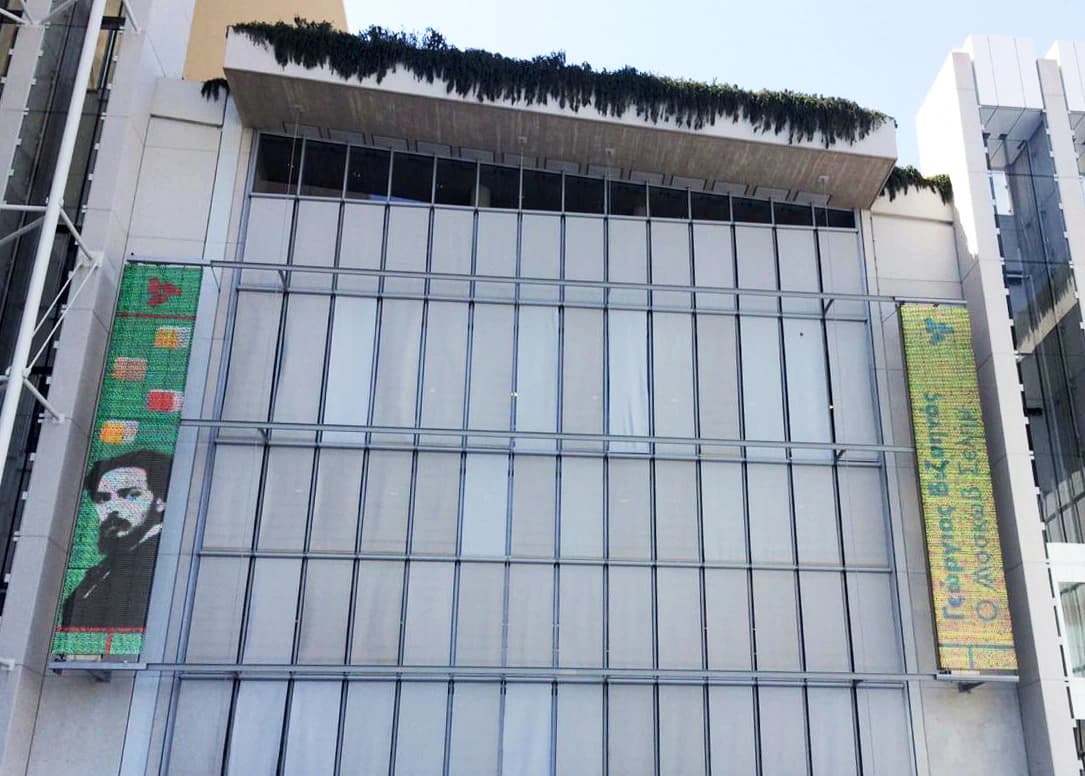
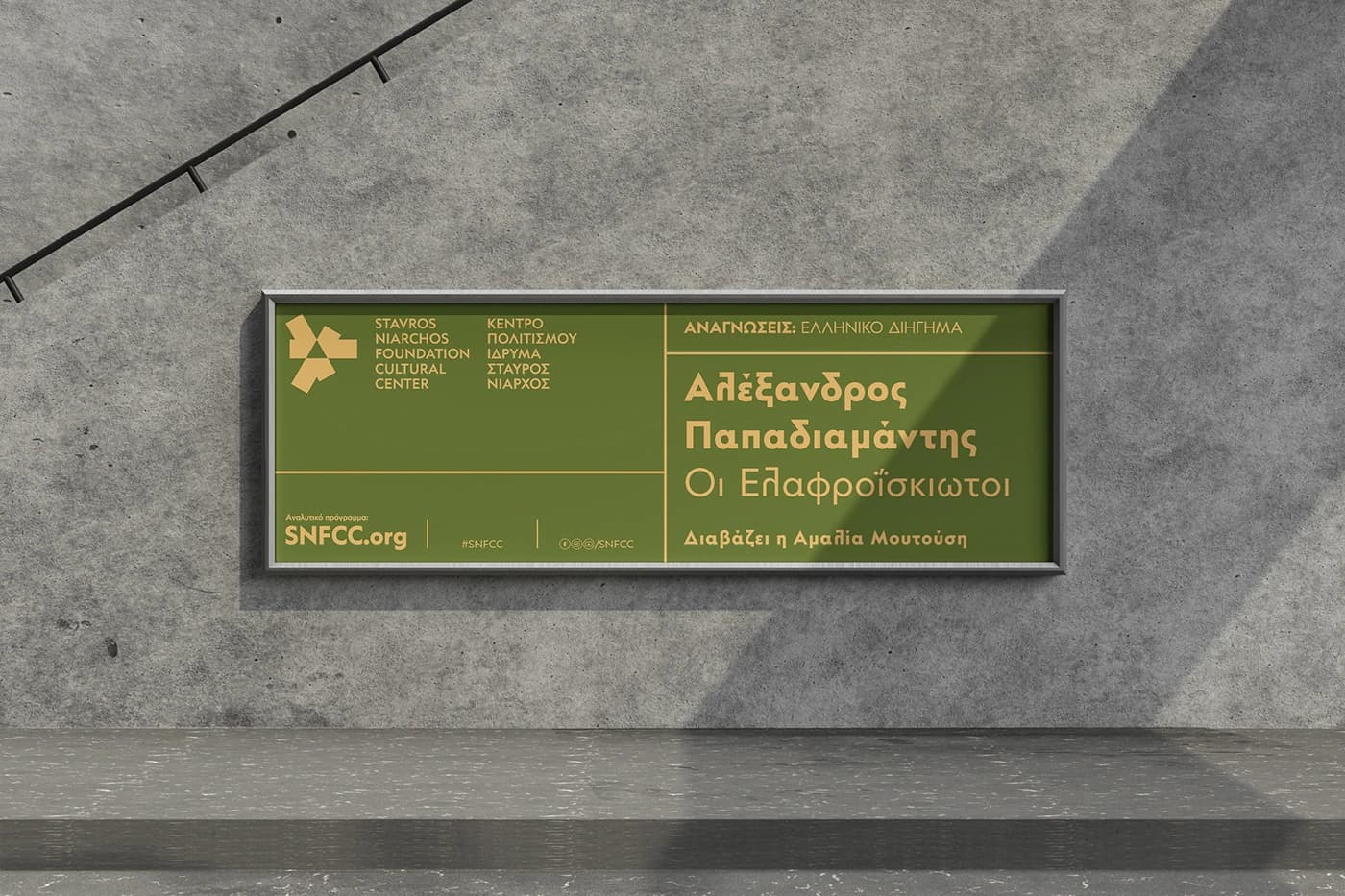
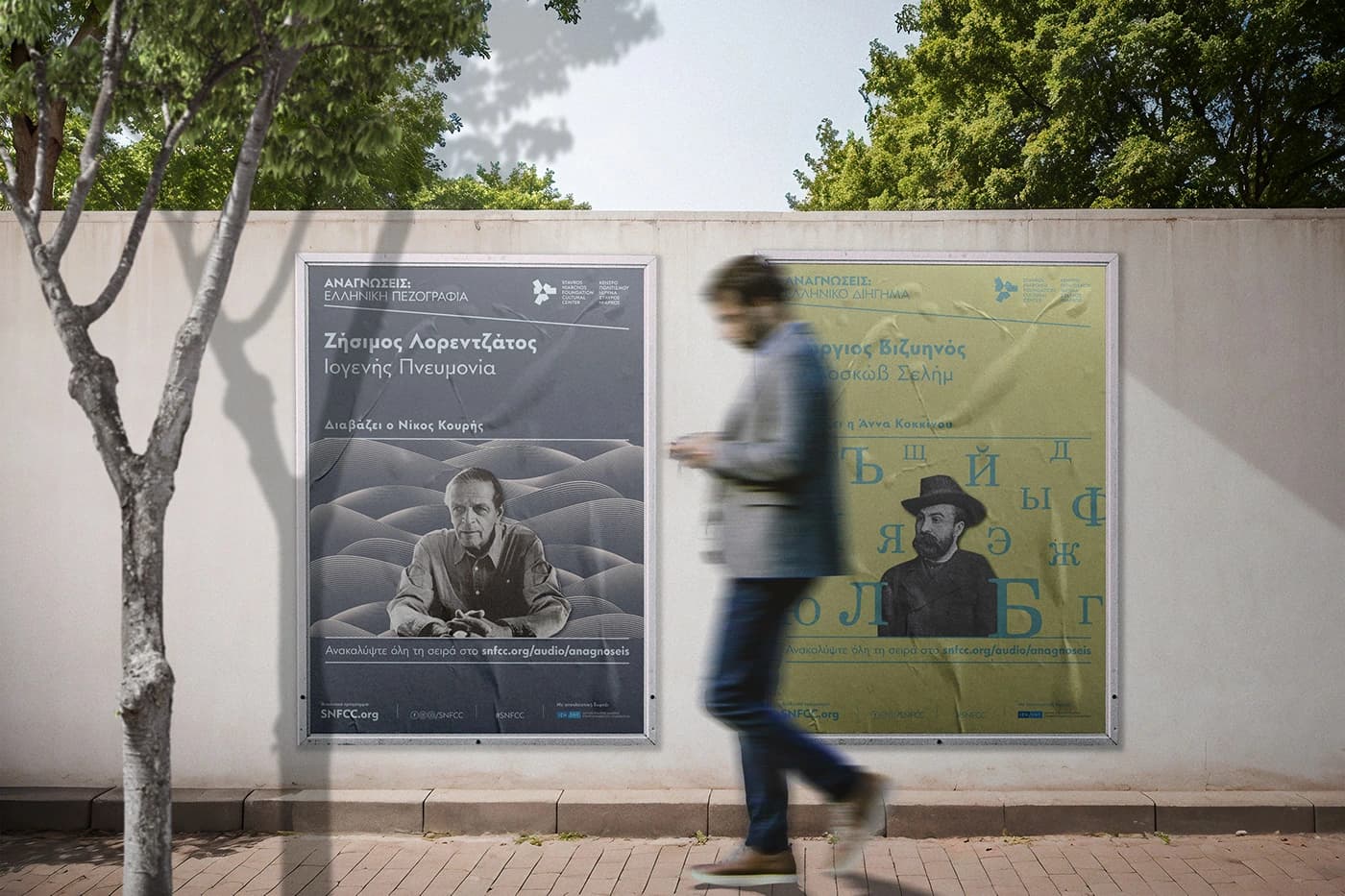
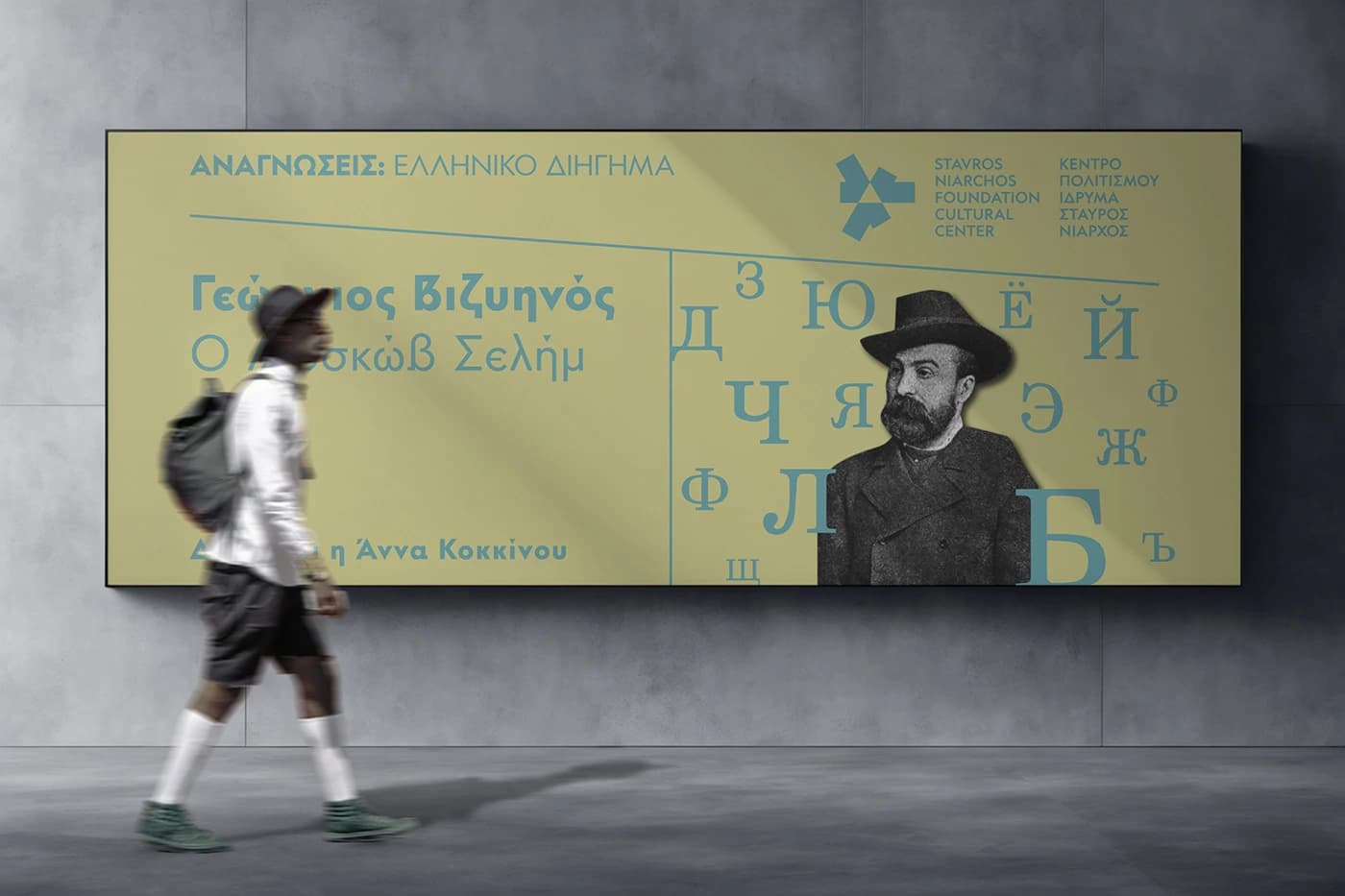
The visual identity of the #snfccAtHome Readings, an online series by the SNF Cultural Center during the lockdown. I designed it reading by reading and carried it onto SoundCloud, social media, LED screens and posters around the building.
The brief
SNFCC’s #snfccAtHome Readings put eleven major Greek literary works into the voices of well-known actors, free for anyone to listen to and aimed especially at students and younger readers who might never come to those texts on their own. That last part is what made me want it. The Center chose the eleven works, and what the series needed from me was an identity fresh enough to bring that audience in and specific enough to do justice to eleven very different writers.
The idea
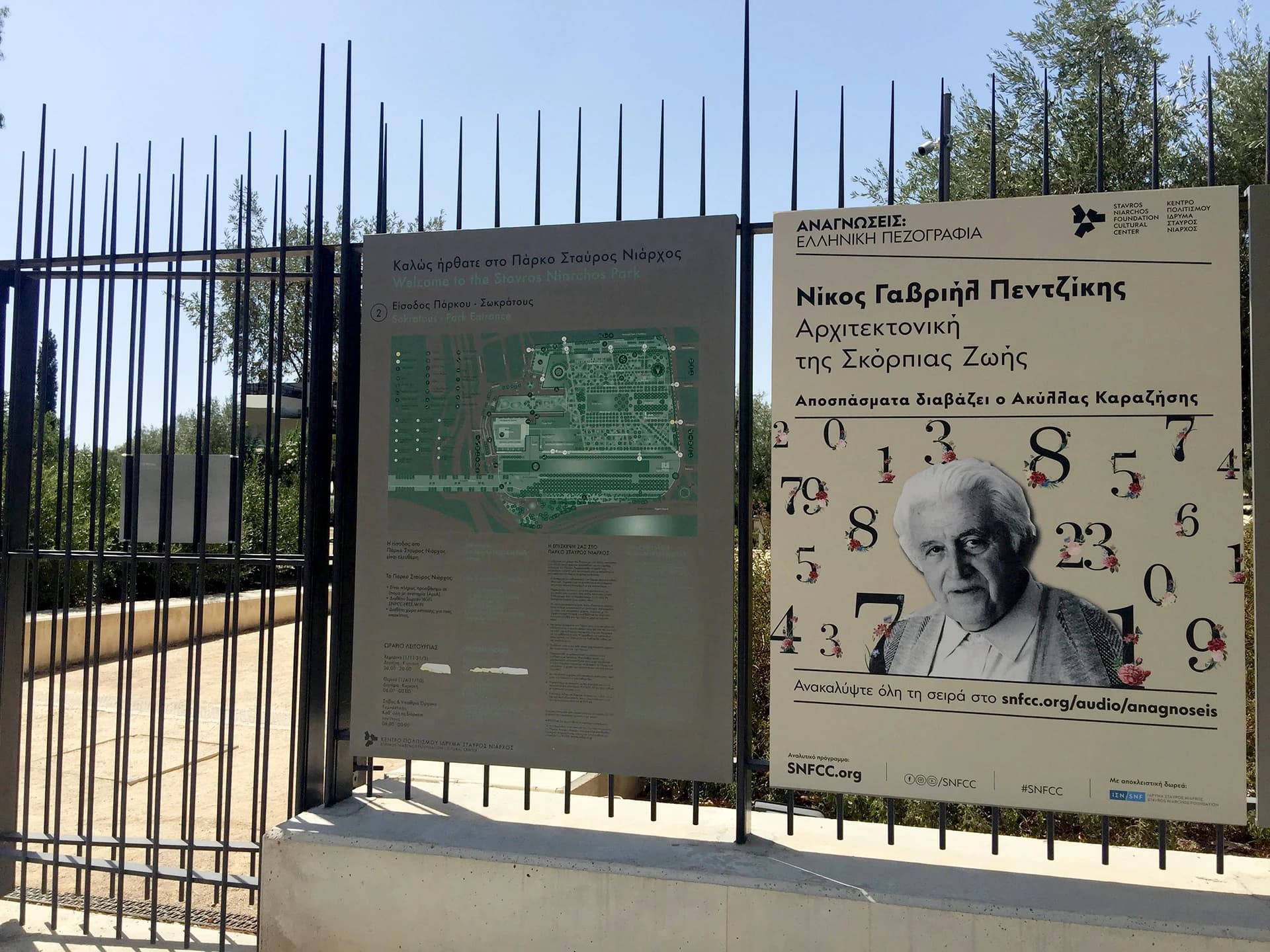
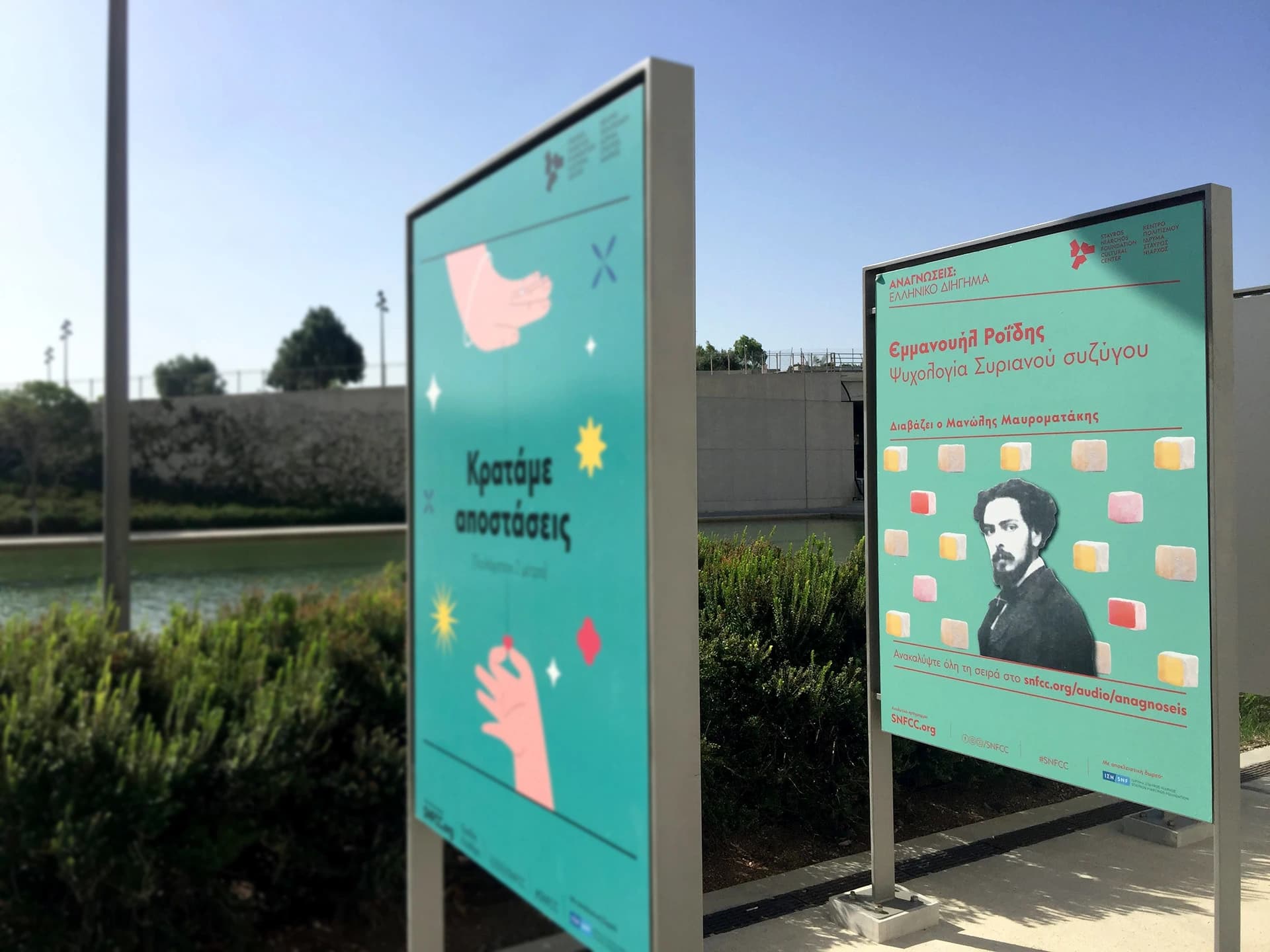
I read all eleven of them before I drew a single line, the biographies first and then the works themselves, writer by writer, from Roidis and Papadiamantis through to Pentzikis and Tachtsis, and it’s still the research I’m fondest of. What I was looking for each time were the few things that belong to that writer and to nobody else, and those are what I rebuilt as image. Every writer started from the beginning again, so the reading and the choosing happened eleven times over, and what holds the series together in the end is that way of working rather than a template laid over all of them.
Project
- Client
- SNF Cultural Center
- Industry
- Culture
- Services
- Digital · Branding
- Role
- Graphic designer · later also marketing associate
- Year
- 2020
- Team
- In-house at SNFCC · the series’ design, from artwork to motion and video
In numbers
- 11readings
- 75,000+listeners across the series
- 21,000+listeners in the first weeks
- 9,000+listens for Moskov Selim, up from 3,000 on day one
- 5+media wrote about it, Kathimerini and Ta Nea among them

“There is nothing quite like watching something you drew at your desk take over a building.”
The detail
The same artwork had to work as a SoundCloud thumbnail and as a 113 × 153 cm metal stand poster, as well as a LED screen which is a much bigger jump than it sounds, so I drew each writer’s elements to hold up at both ends of it. That’s why the compositions stay simple however close you get to them: I wanted the person standing in front of the poster and the person scrolling on a phone to meet the same writer.
In production
COVID kept me out of the print house, so I checked the printed pieces when they arrived at the Center instead, found the misses and sorted the corrections out with the printers until they came back right. The installation crew put everything up around the building and I was there with them, working out where each piece should go and catching the odd one that had gone up wrong so it could be fixed. I loaded the digital files onto the screens and the LED curtains myself. A composition that works on a desk doesn’t always survive a wall in a foyer, and I wanted to be there to see it, partly to catch what needed fixing, and partly because there is nothing quite like watching something you drew at your desk take over a building.
Production notes
- 01Research into eleven writers, their biographies and their works
- 02Website banners, Facebook and Instagram posts, Instagram video stories
- 03LED curtains, single and quad screens
- 0435 × 50 cm posters and 113 × 153 cm metal stand posters
- 05Print corrections agreed with the printers after checking the delivered pieces
- 06Placement around the building directed on site, digital files loaded onto the screens and curtains
Since then
The series found its audience quickly. Ta Nea reported more than 75,000 people listening to the recordings on the Center’s website and Facebook between the middle of April and the end of June, and Kathimerini followed the numbers as they climbed: Vizyinos’s Moskov Selim had 3,000 listens on its first day and had passed 9,000 five weeks later. The same paper wrote about the series as a digital audiobook library taking shape as it went, unique in the country for its quality and for the works it chose. The artwork was the first thing anyone met, before a single word had been read aloud.
The first cycle closed on June 24, 2020, with Kostas Tachtsis, read by Vasilis Papavasileiou, and the readings later moved back into the building as live events. The recordings are all still free and online, on the SNFCC website and on SoundCloud, which was the point from the start: a permanent place for students and anyone else to hear these texts read properly.
I joined the Center for six months and stayed sixteen, with a wider role: by the end I was there as Graphic Designer & Marketing Associate.
Links
- kathimerini.gr
- Kathimerini
- tanea.gr
- Ta Nea
Credits
- Rights
- © SNFCC