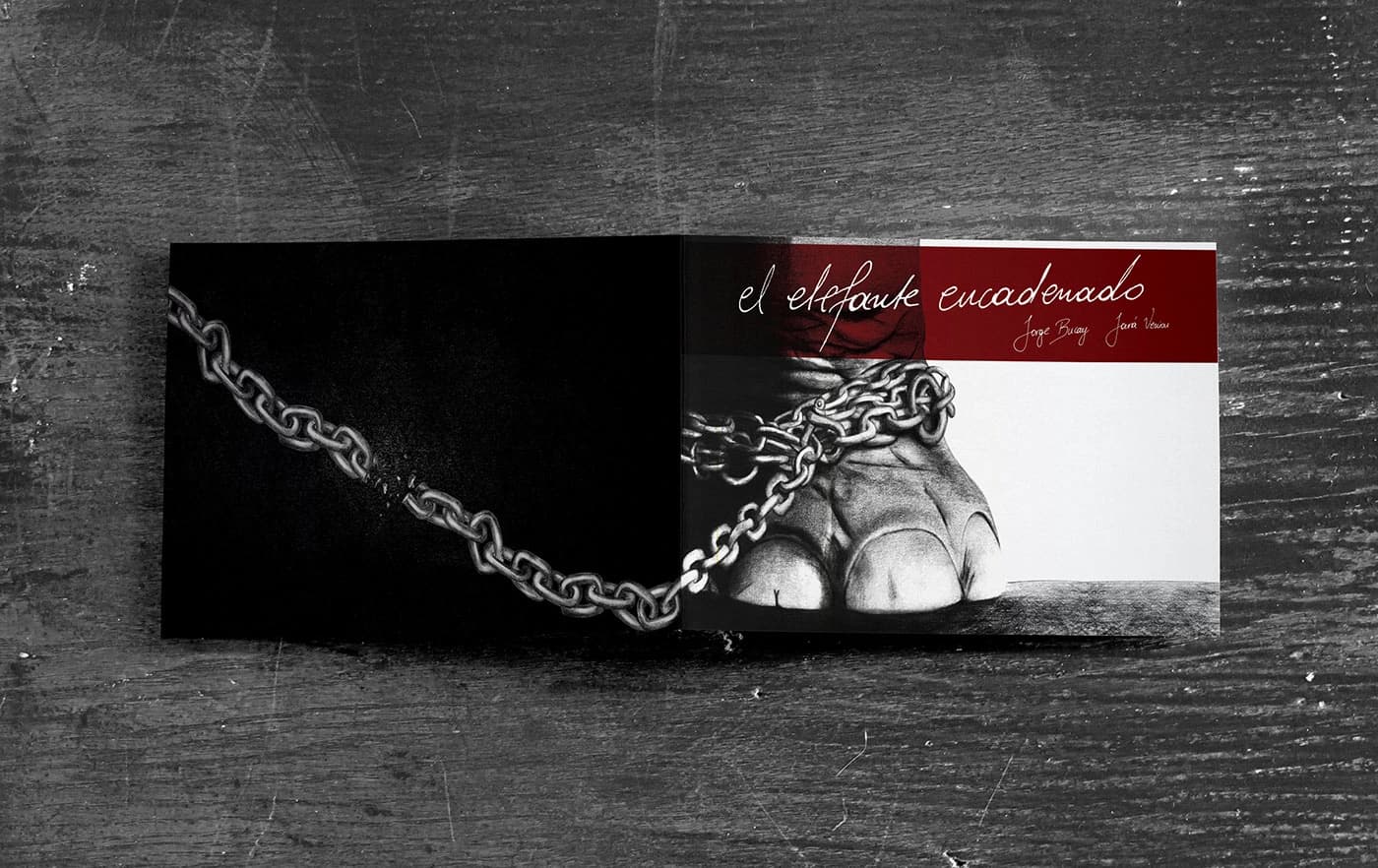
The Chained Elephant
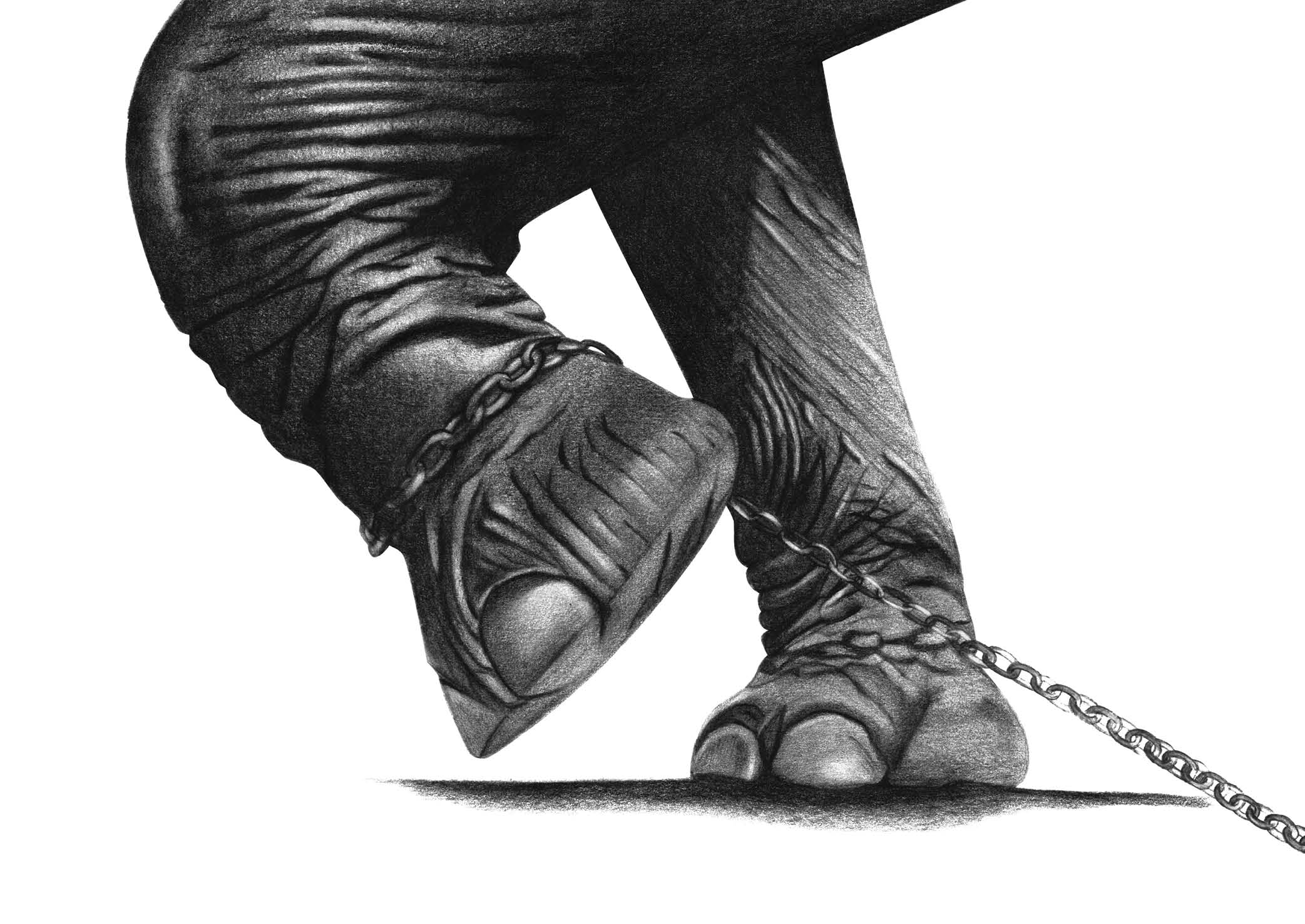
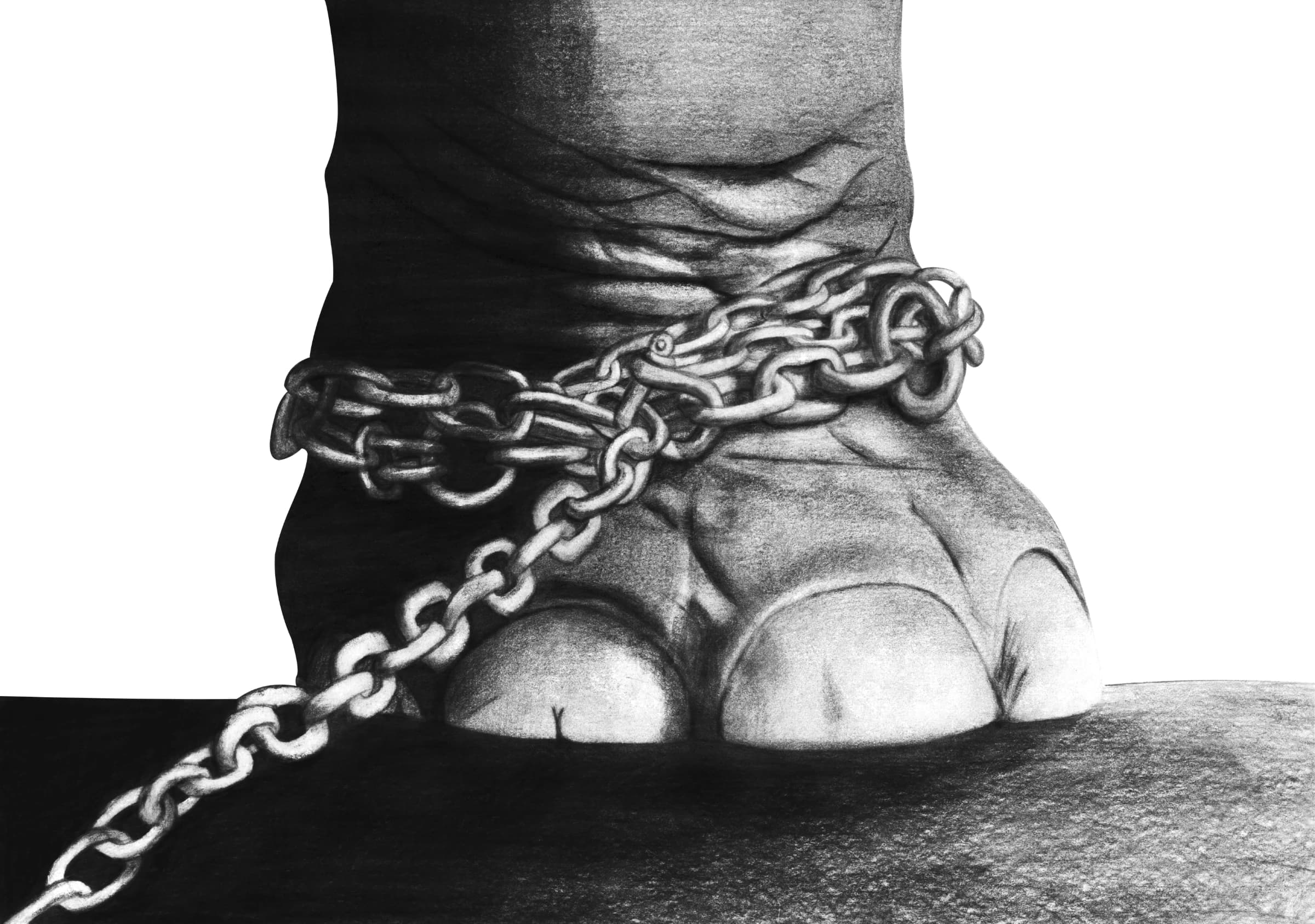
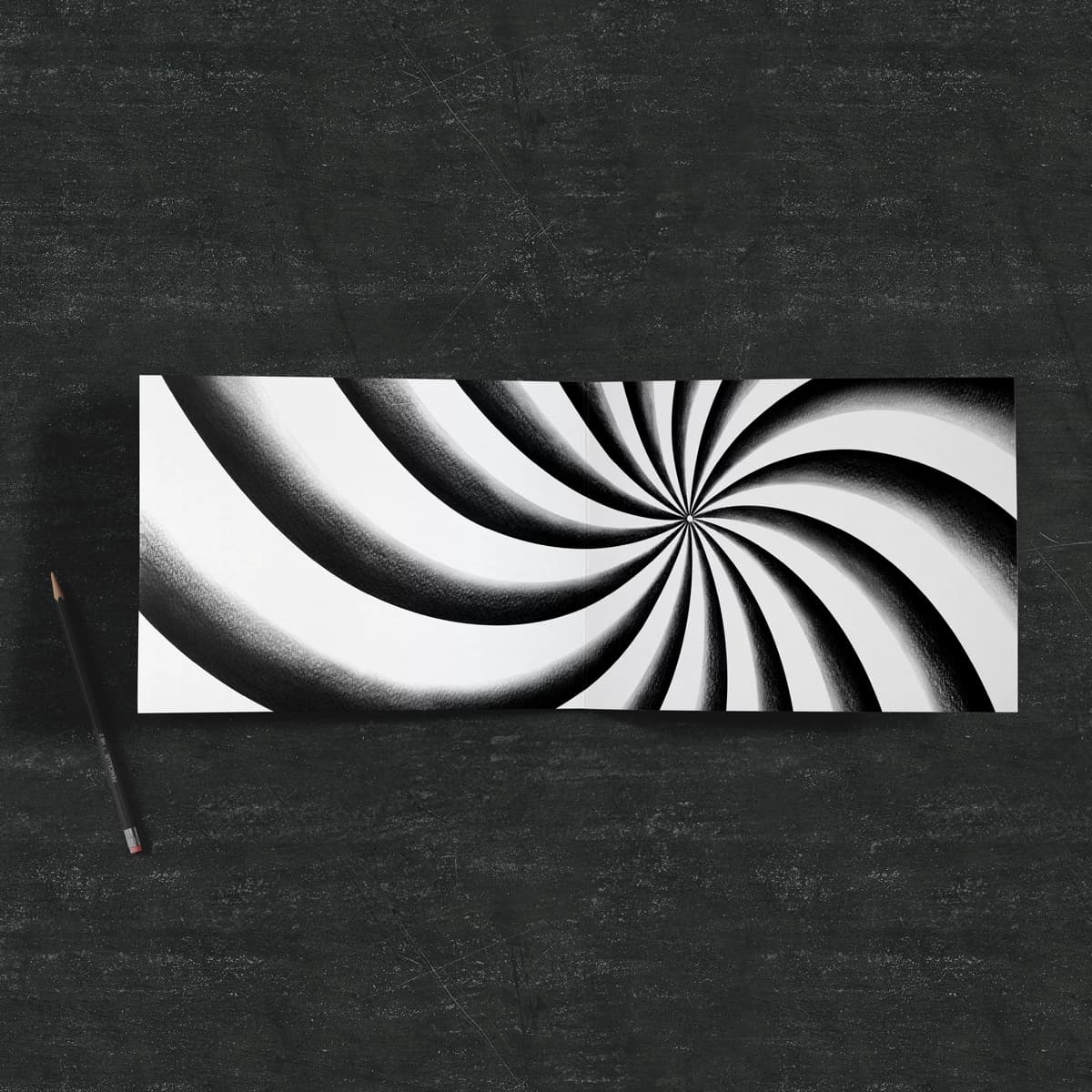
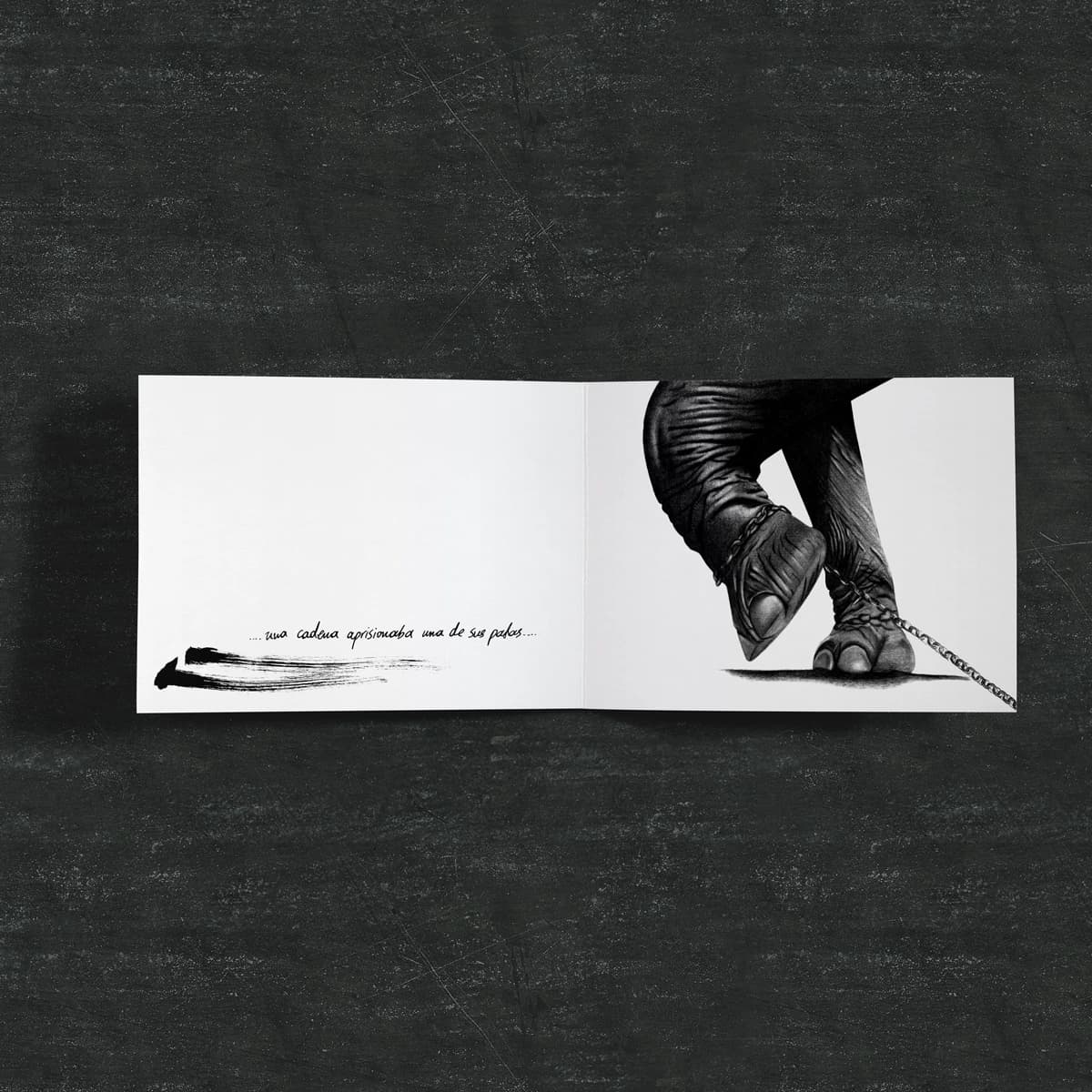
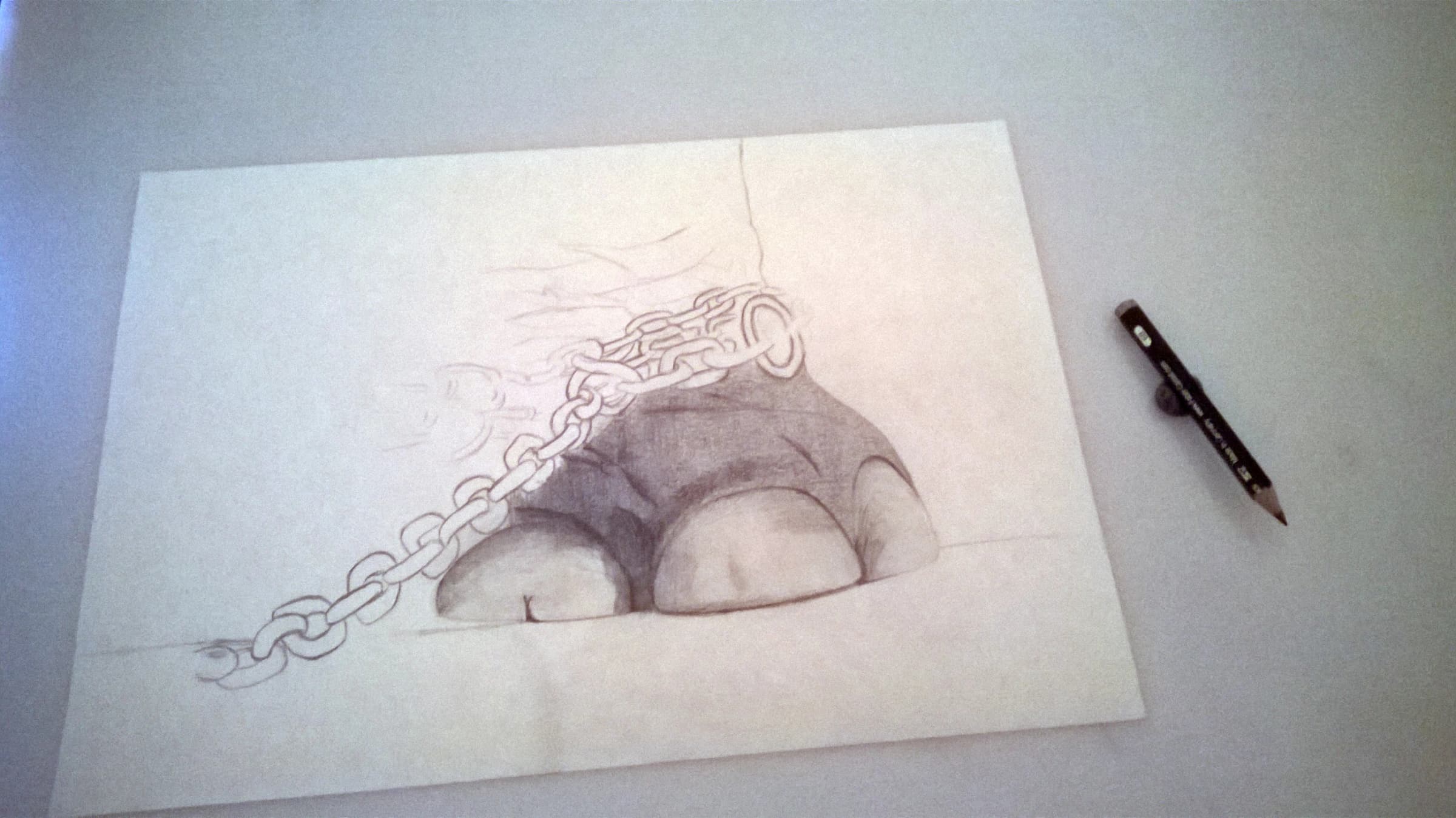
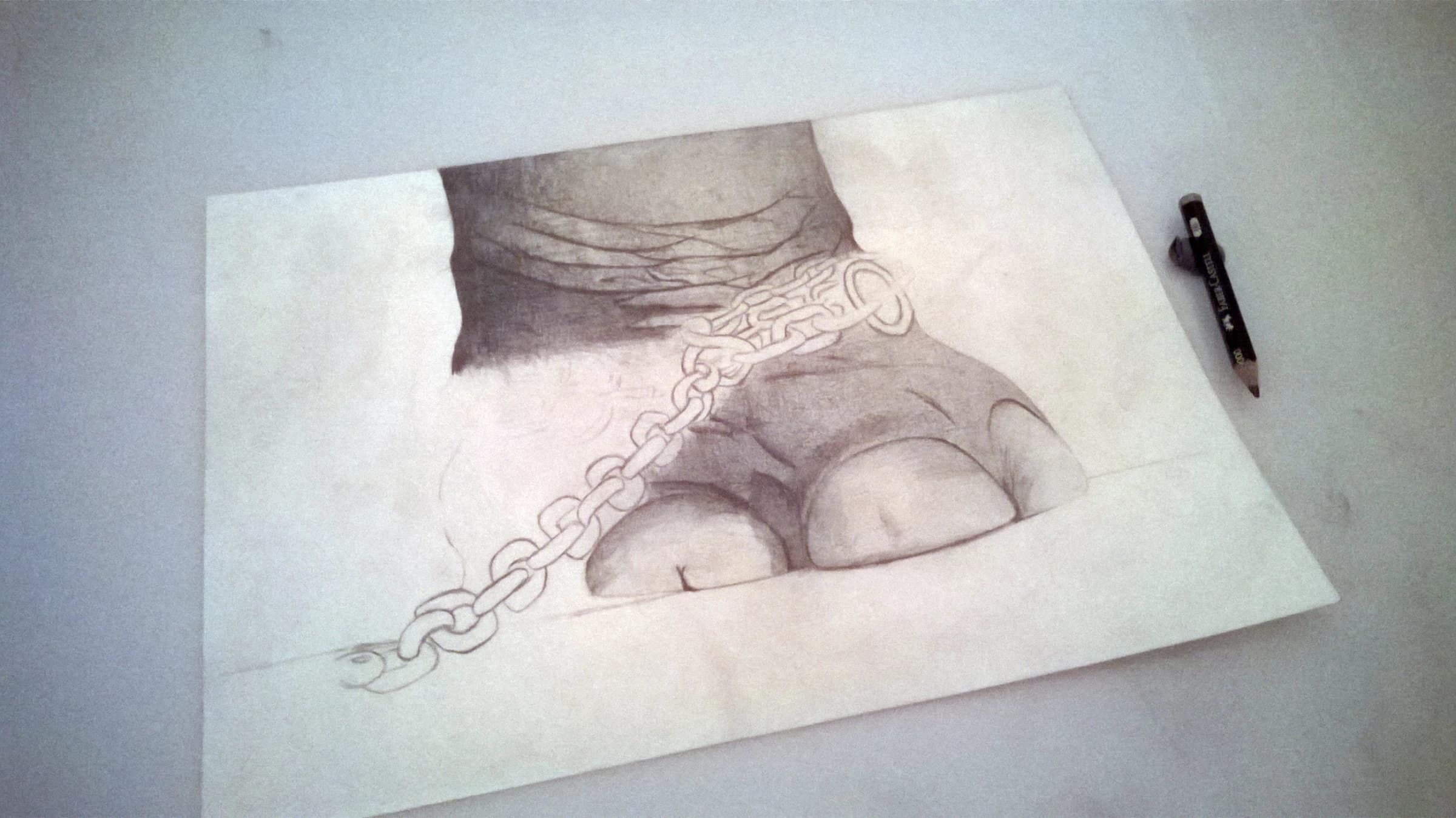
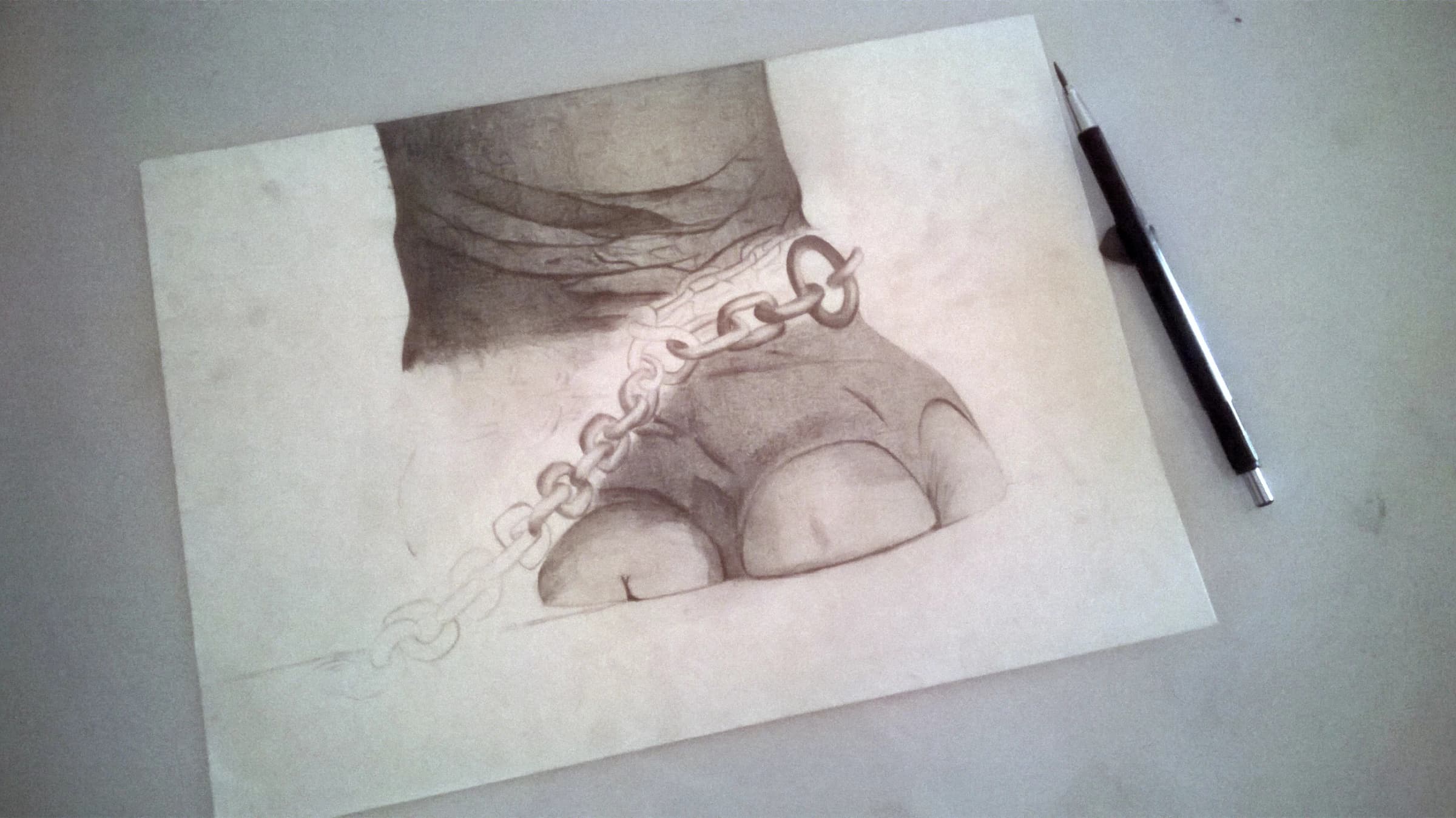
Drawing the chained elephant meant drawing a memory rather than a rope.
At a glance
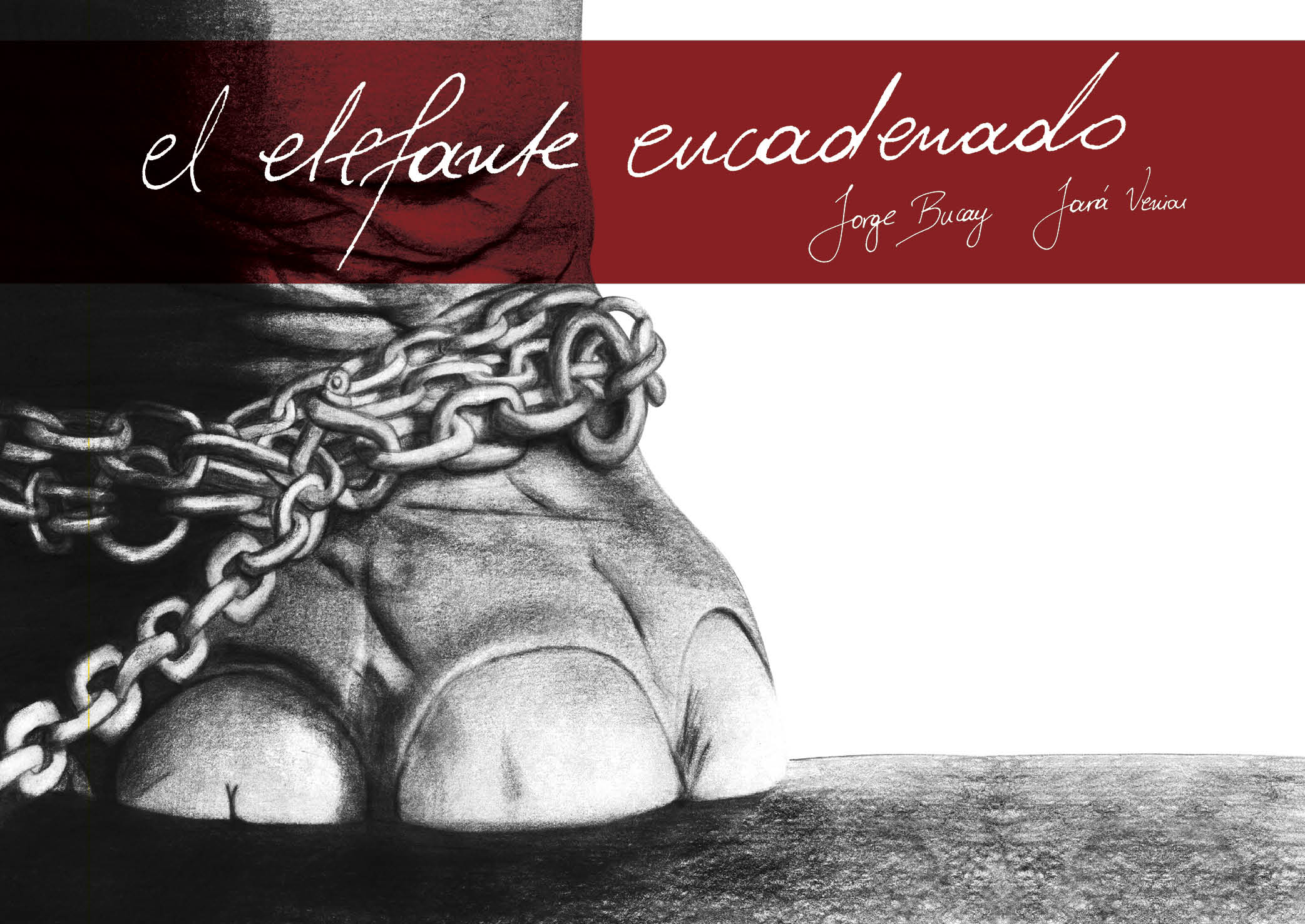
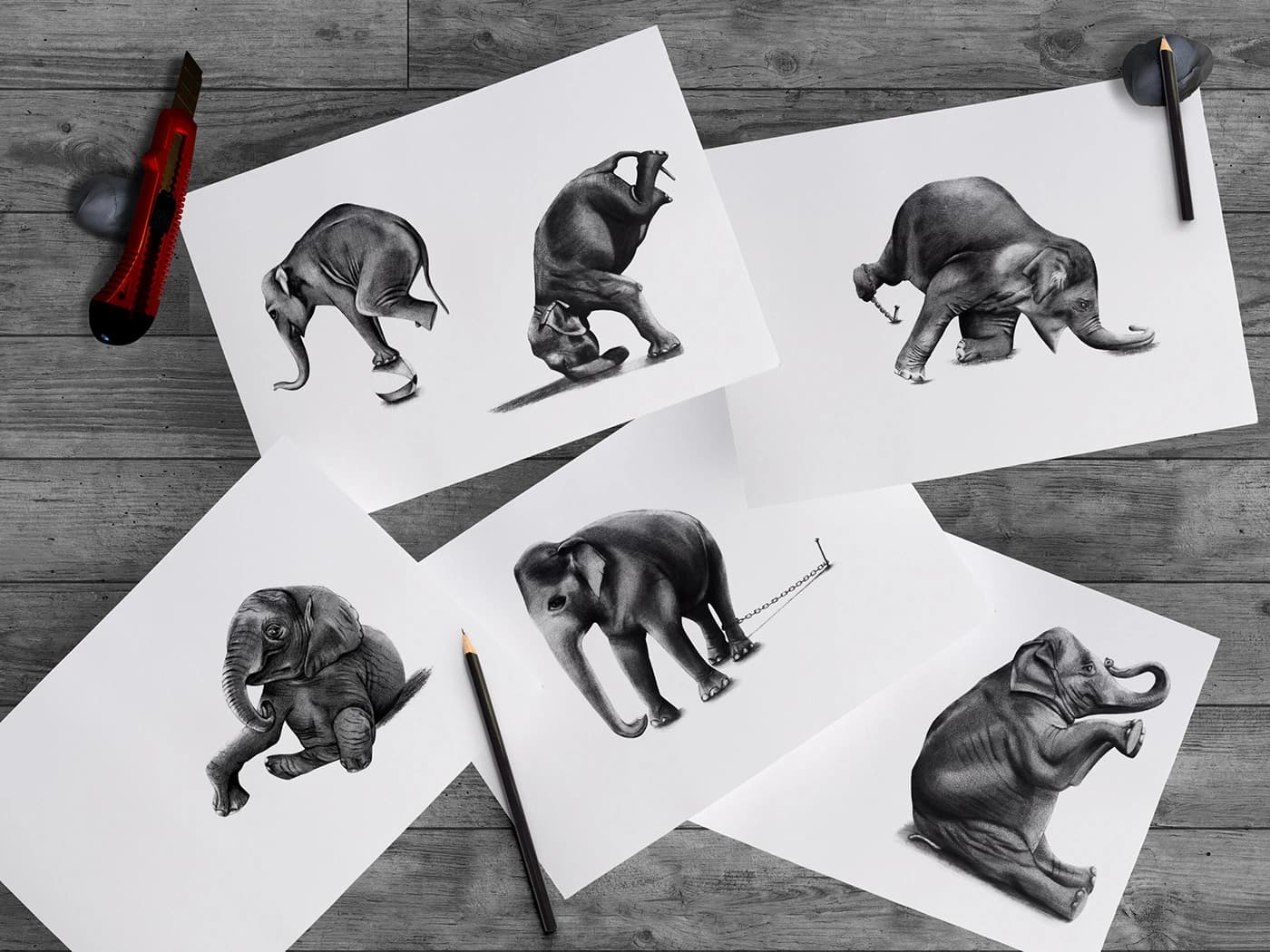
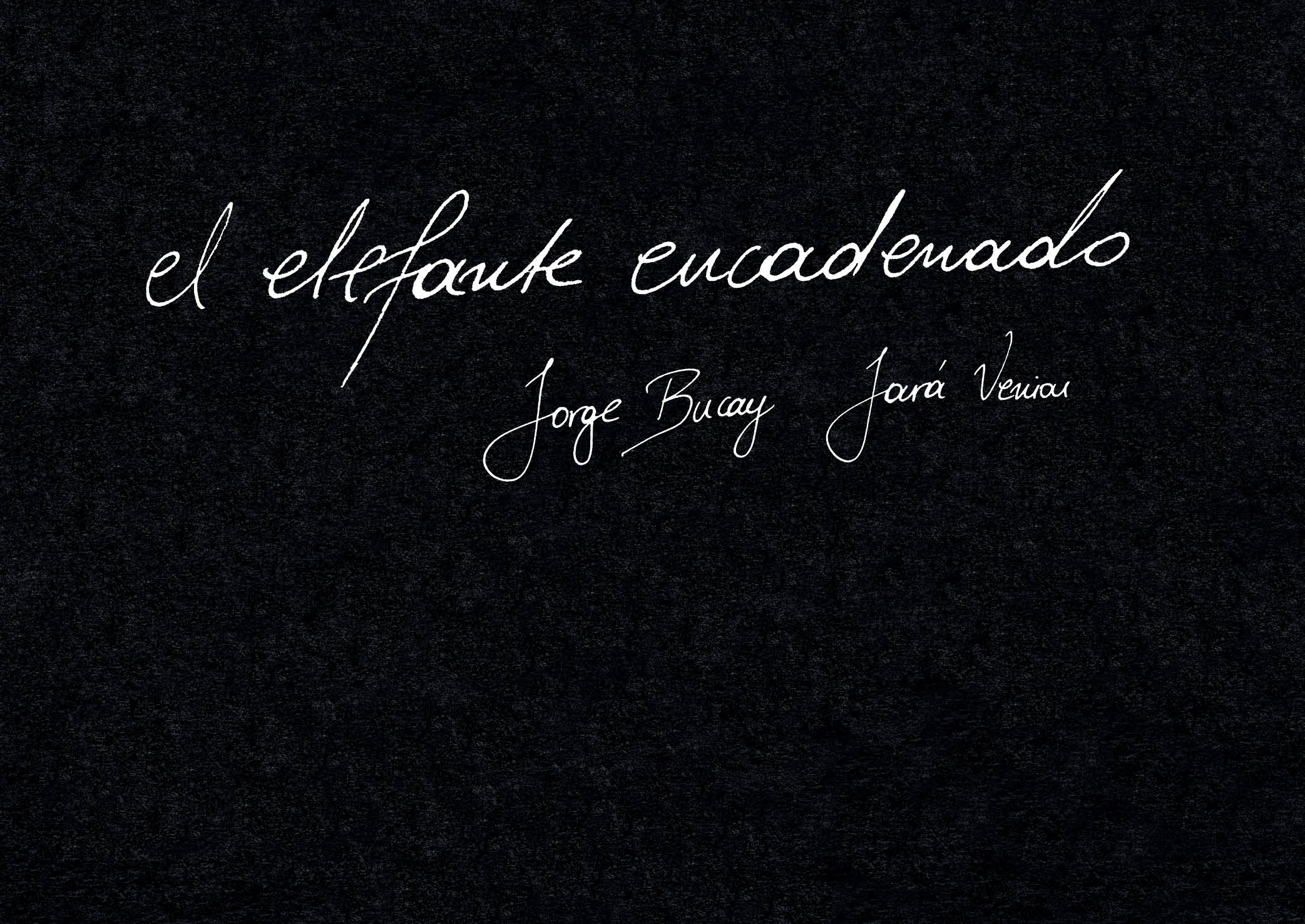
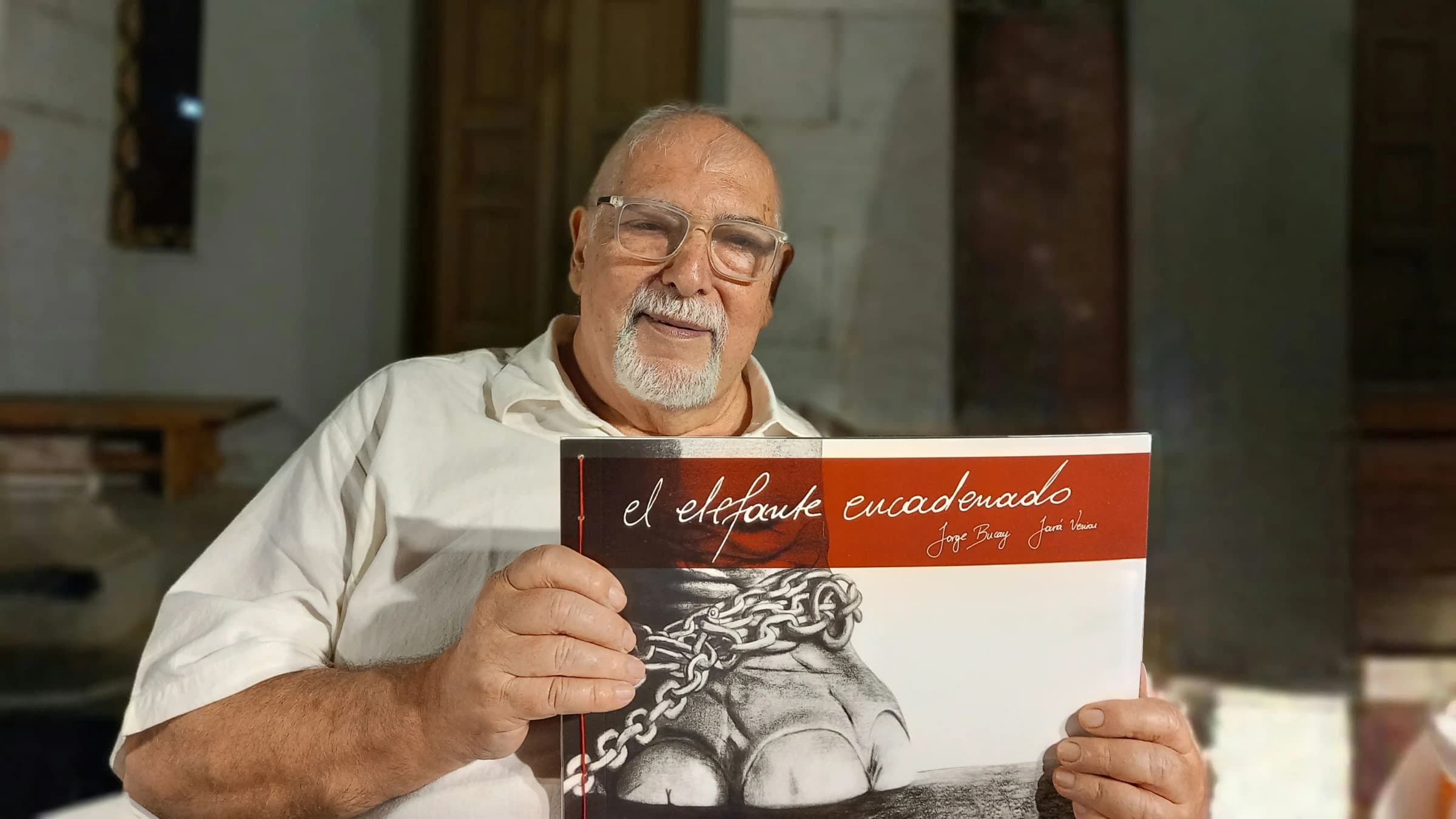
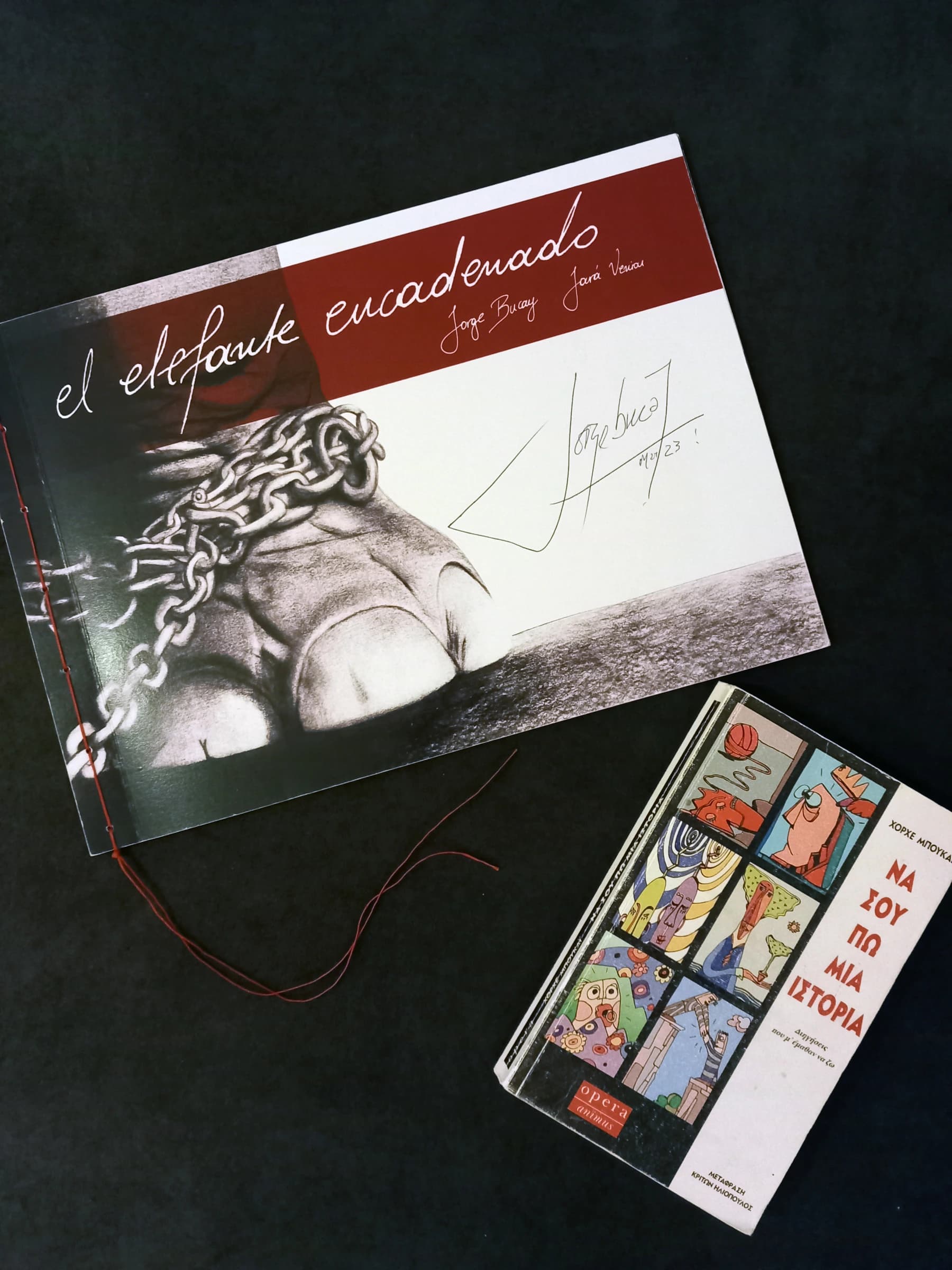
Bucay’s chained elephant, drawn for grown-ups in pencil and brush, with the text lettered by hand in Spanish. I bound ten copies myself with red thread, and one of them is now his.
The brief
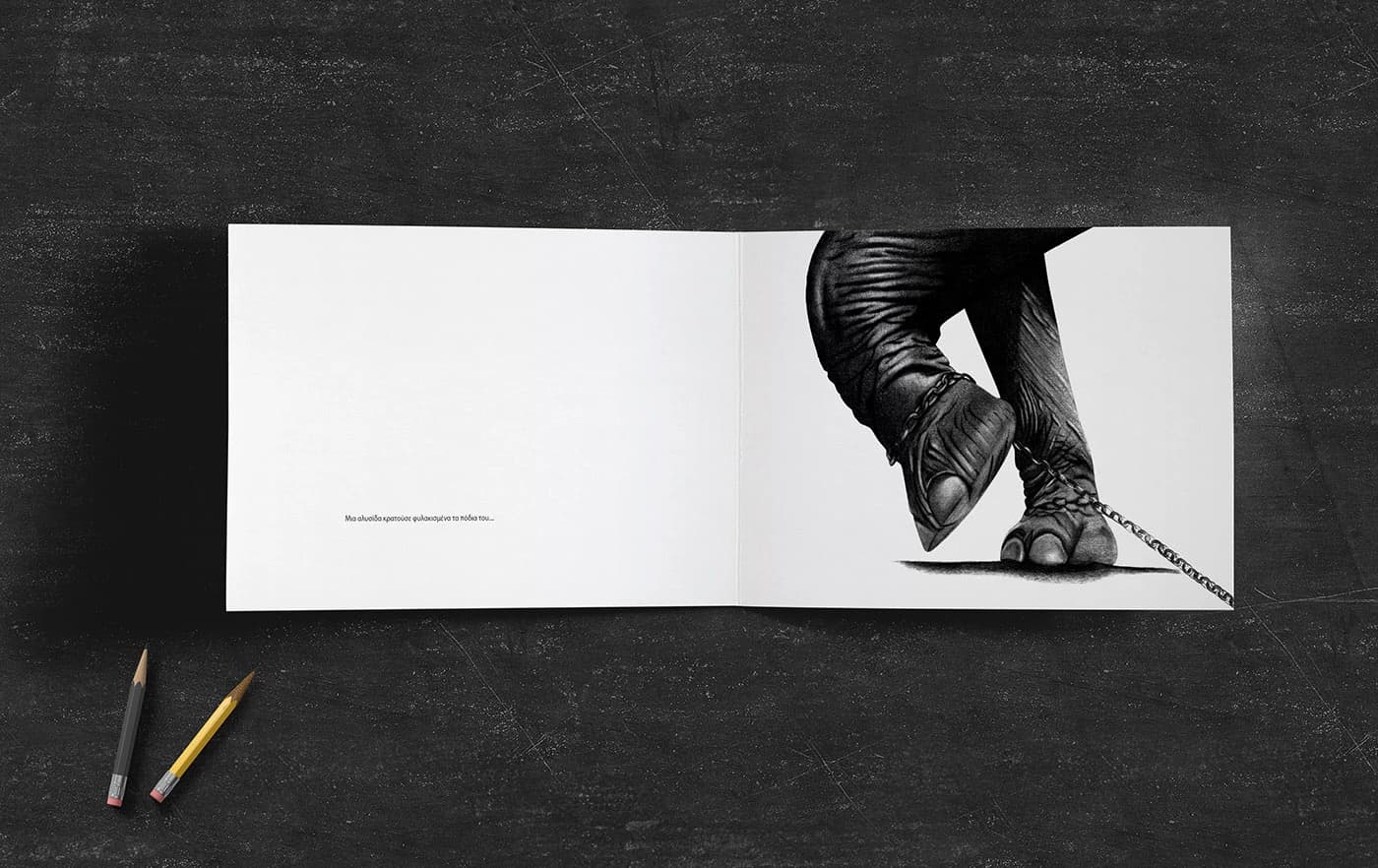
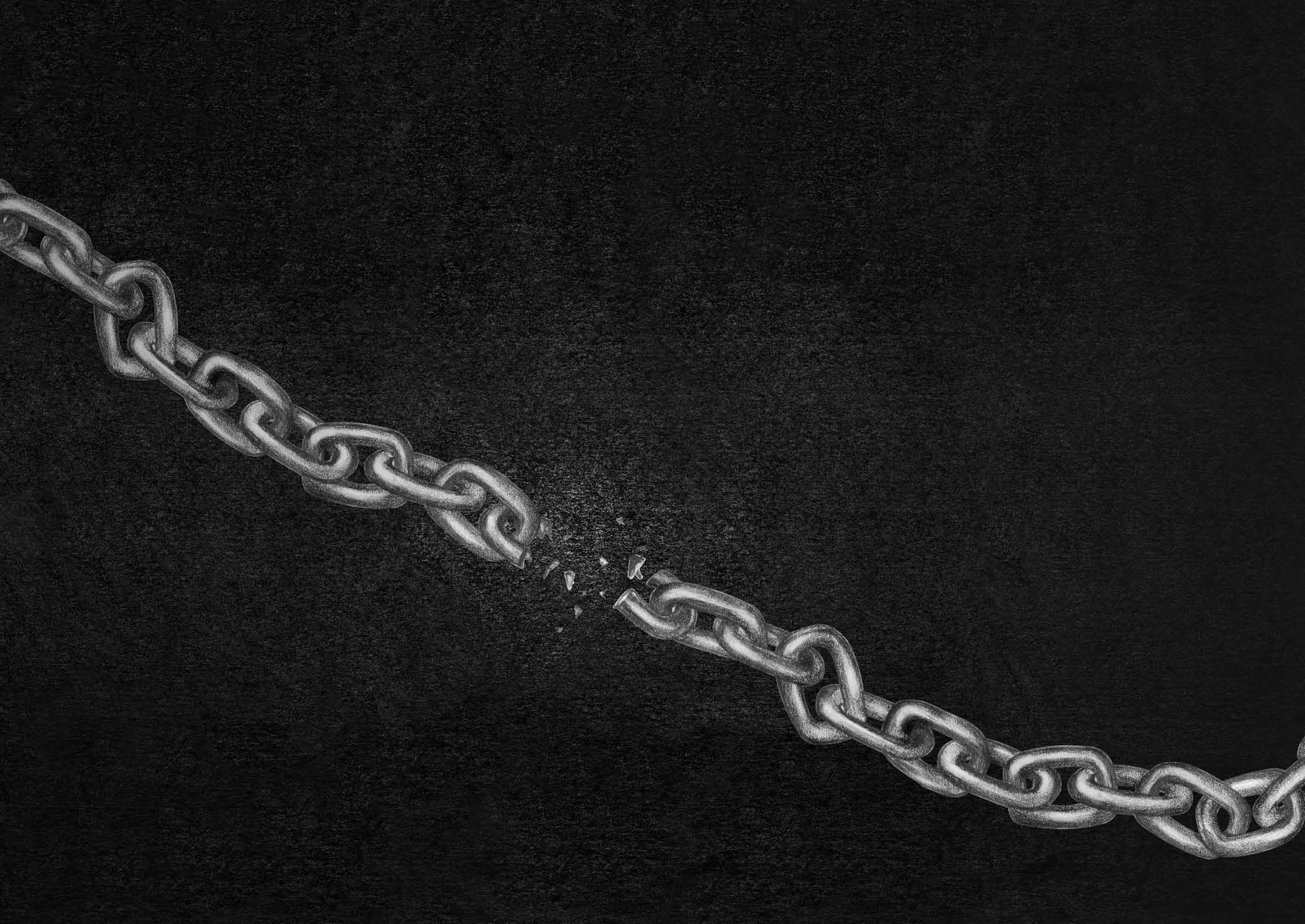
I chose Bucay’s chained elephant because it had been speaking to me for years about things I recognized in my own life. The elephant is tied to a small stake it could pull out any day of its adult life, and it stays because when it was a calf it tried, and it couldn’t, and somewhere in there it decided that it never would. Nearly every illustrated version of this story is made for children. I wanted to make one for the grown-ups who are still standing next to that stake, because the wound the story is about doesn’t stay behind in childhood, and I wanted the drawings to show that.
The idea
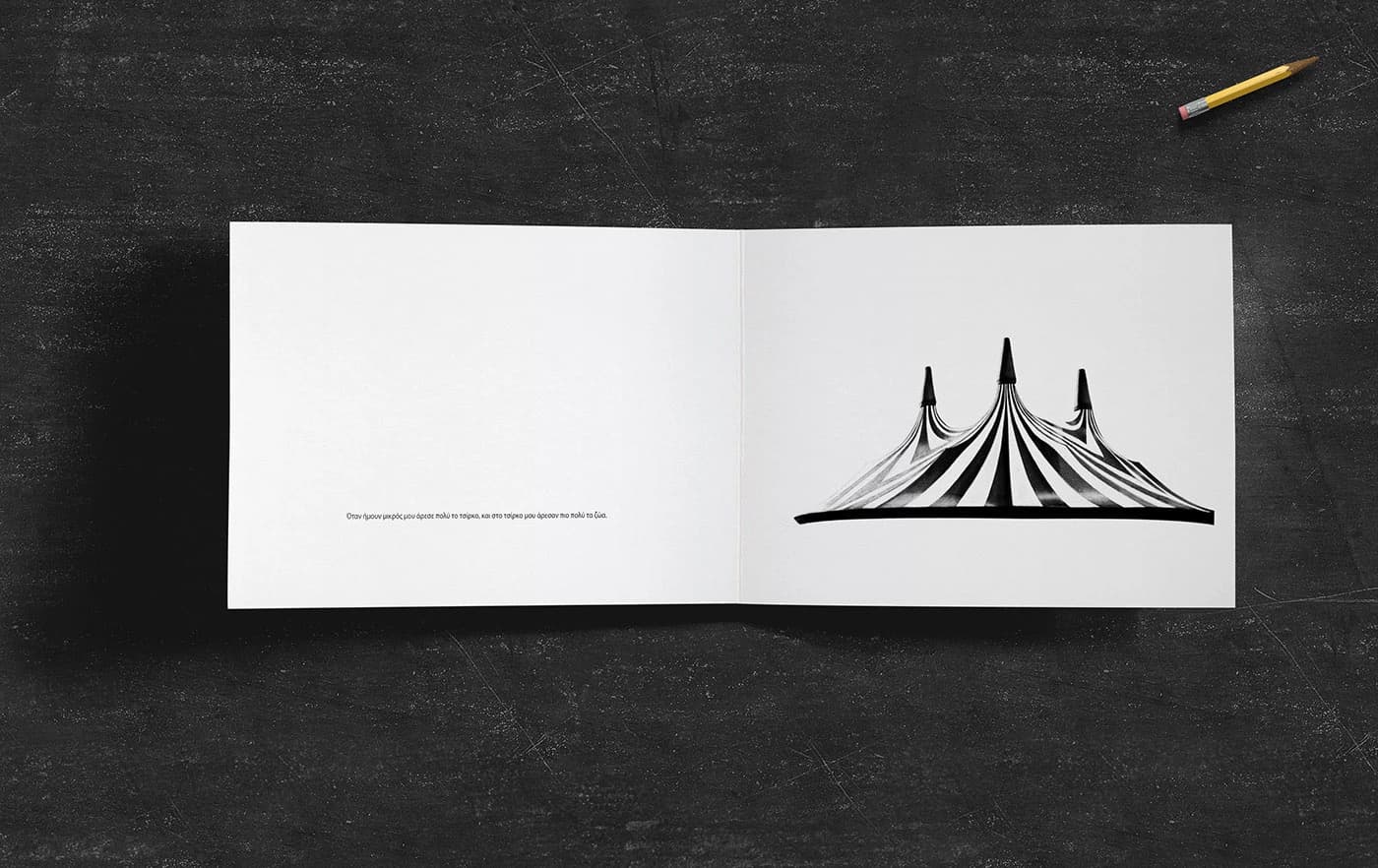
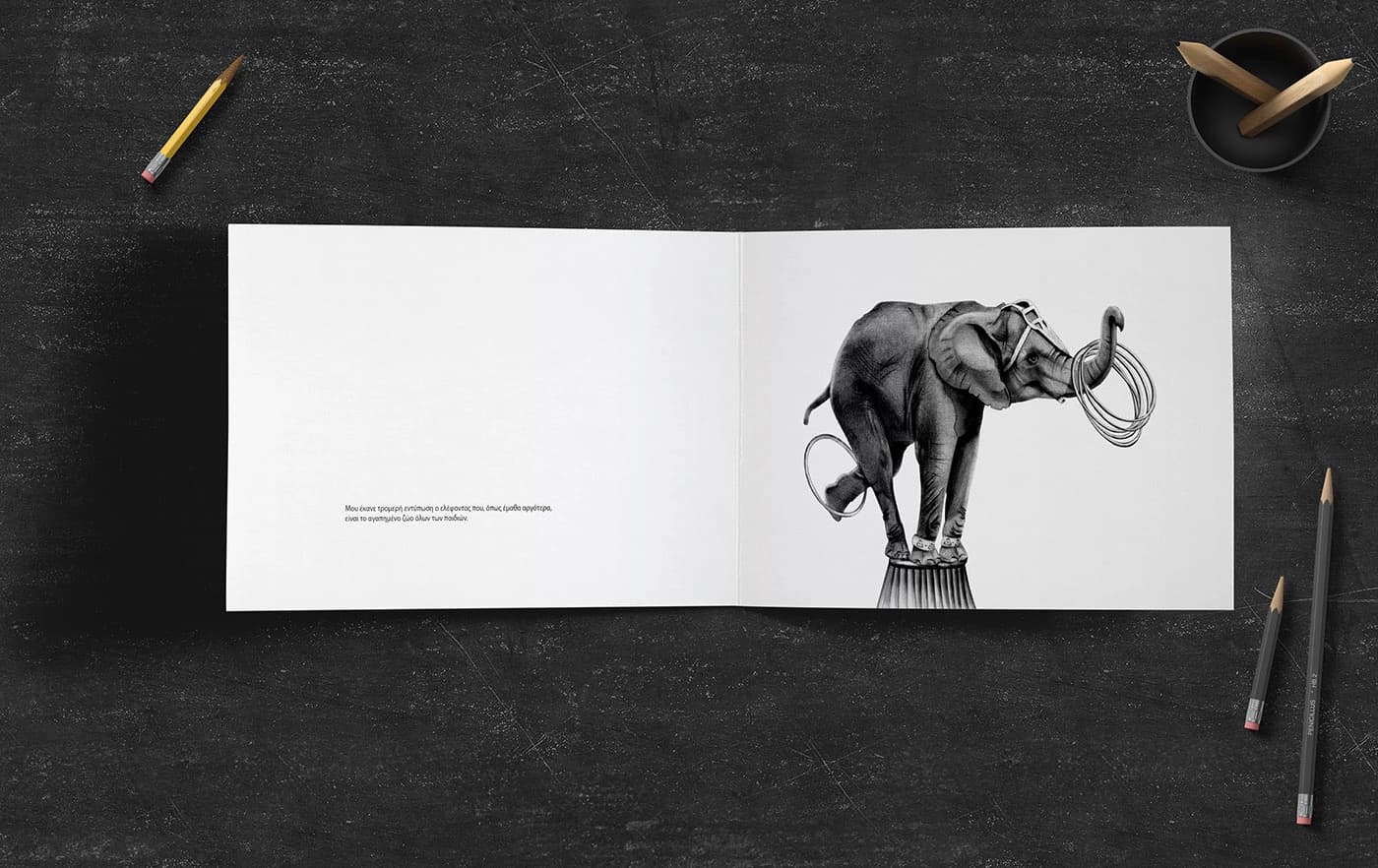
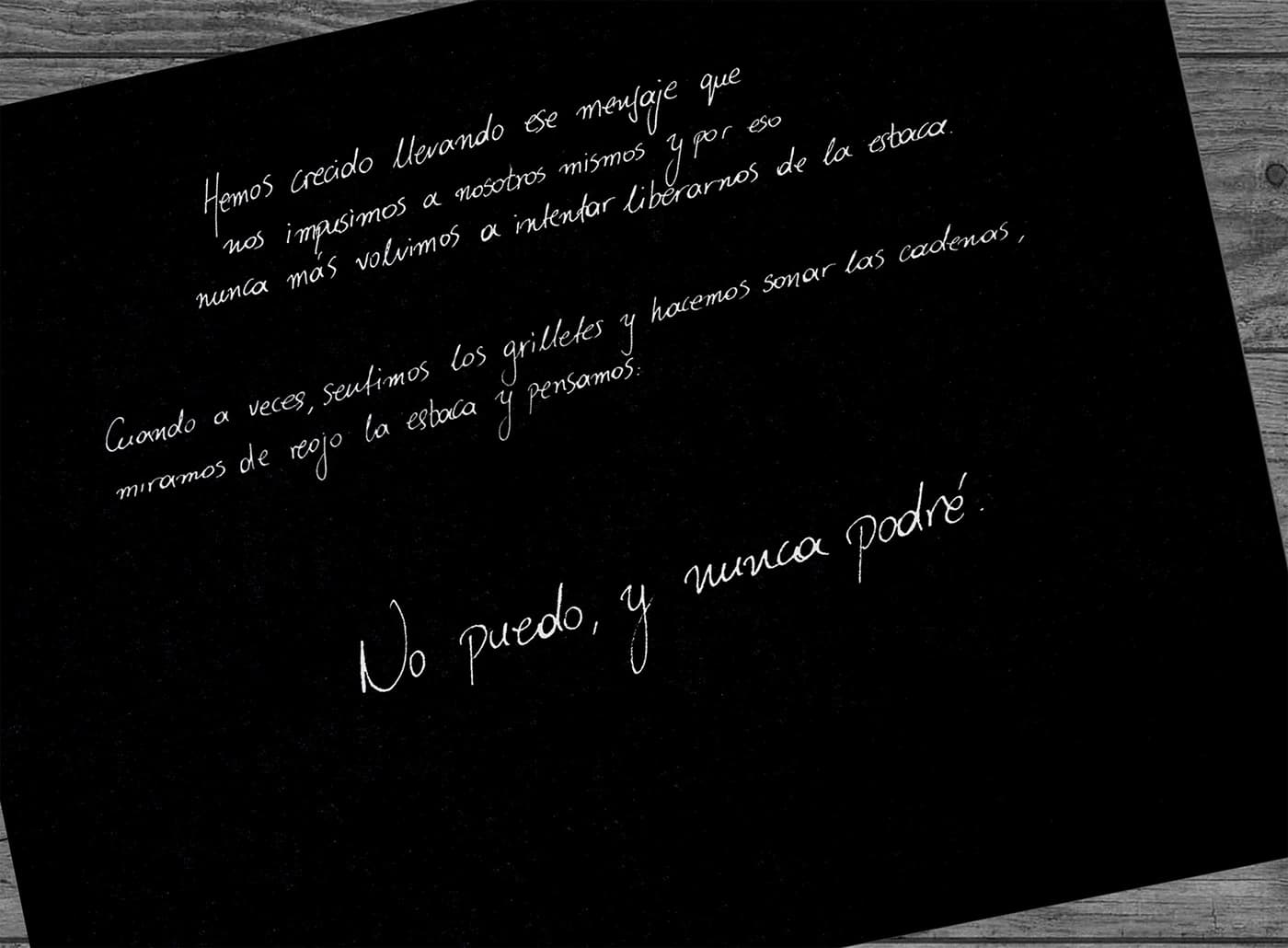
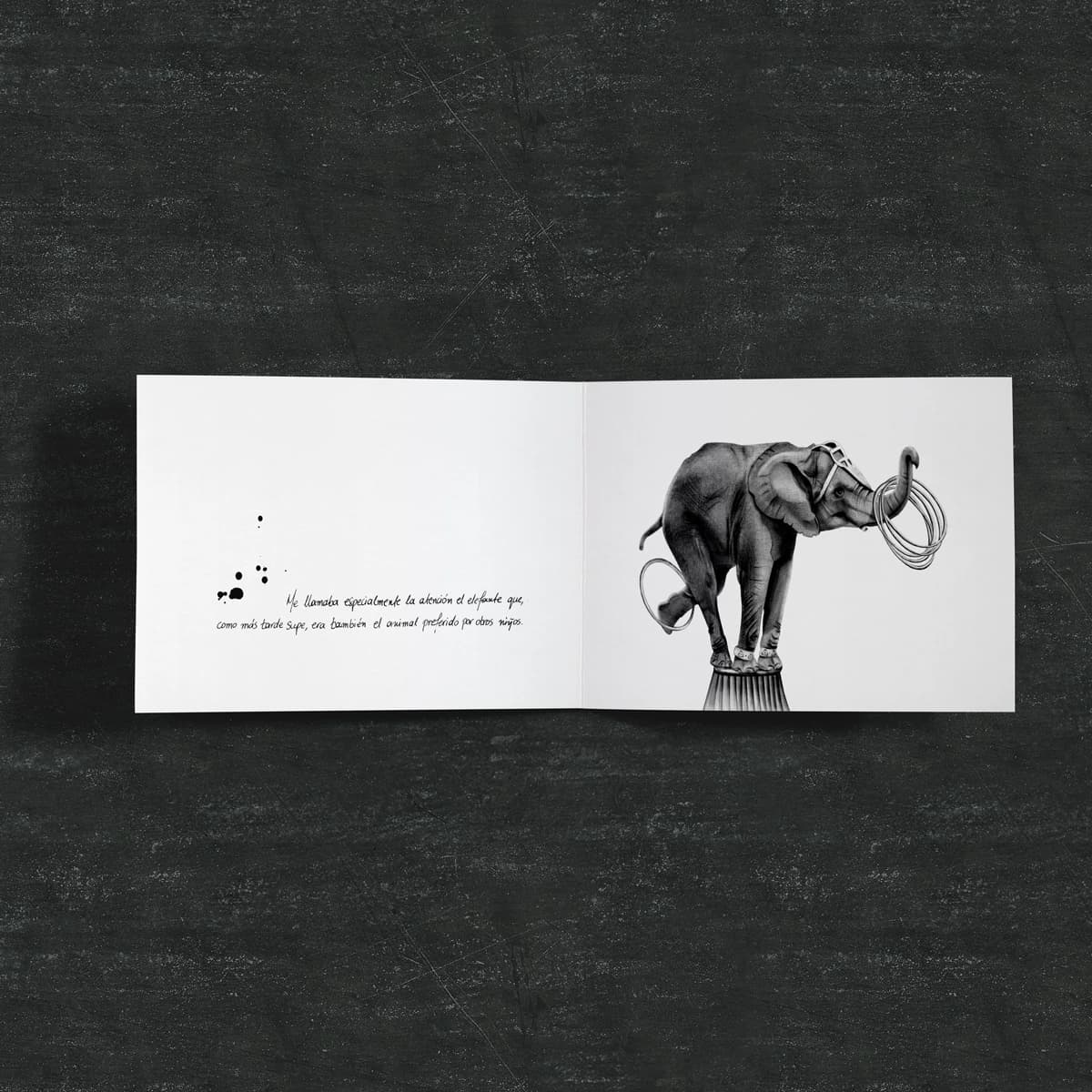
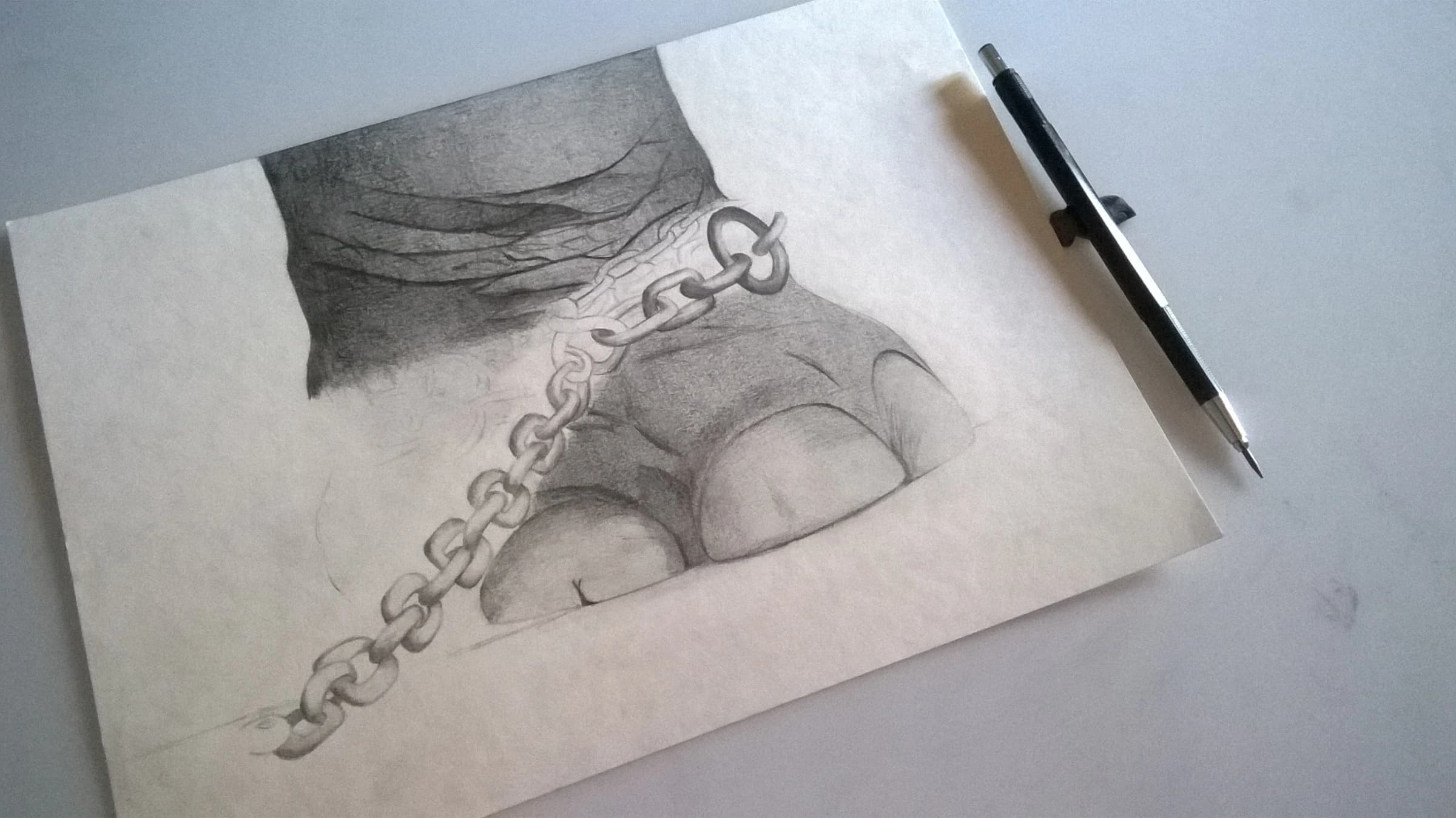
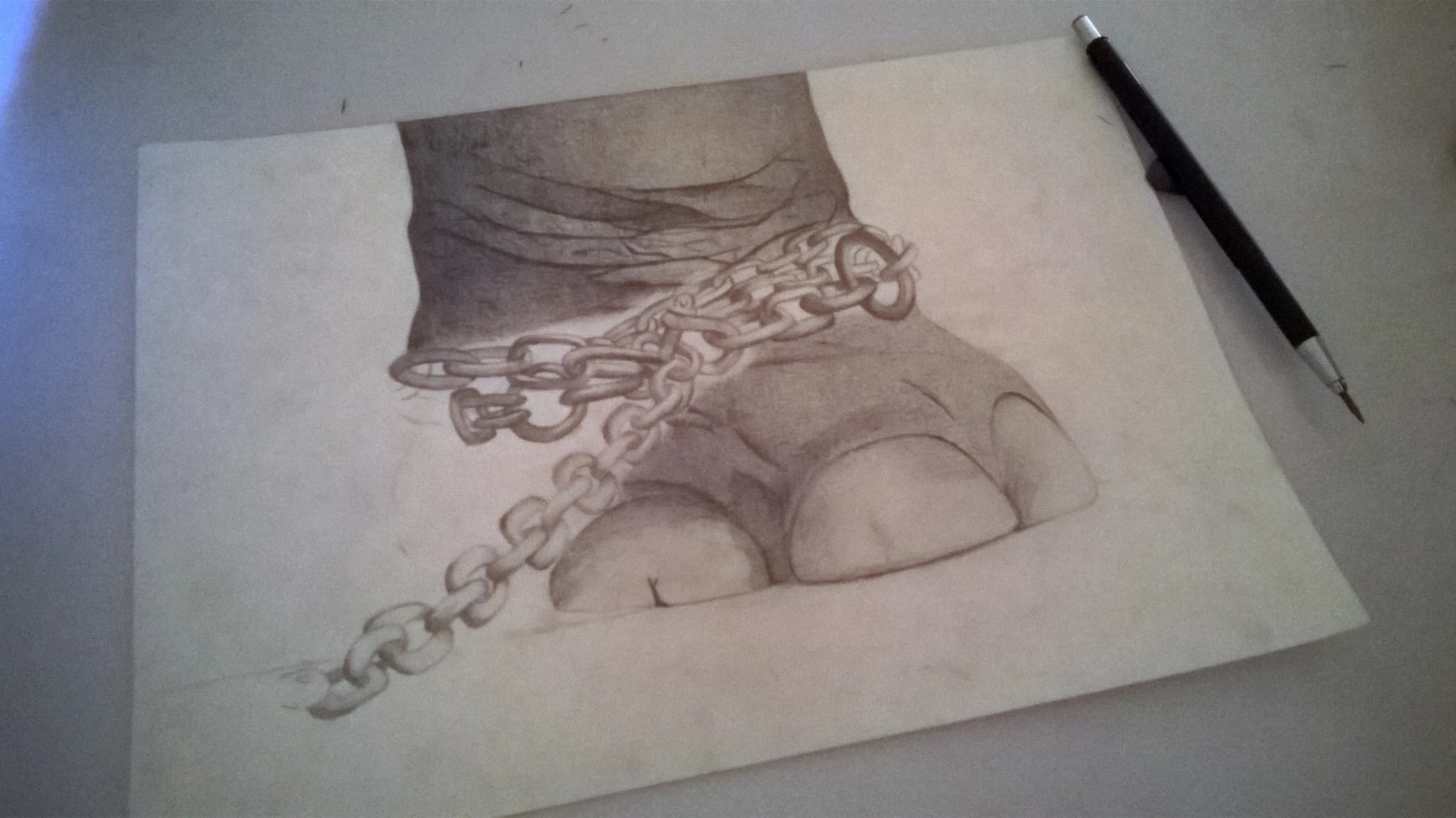
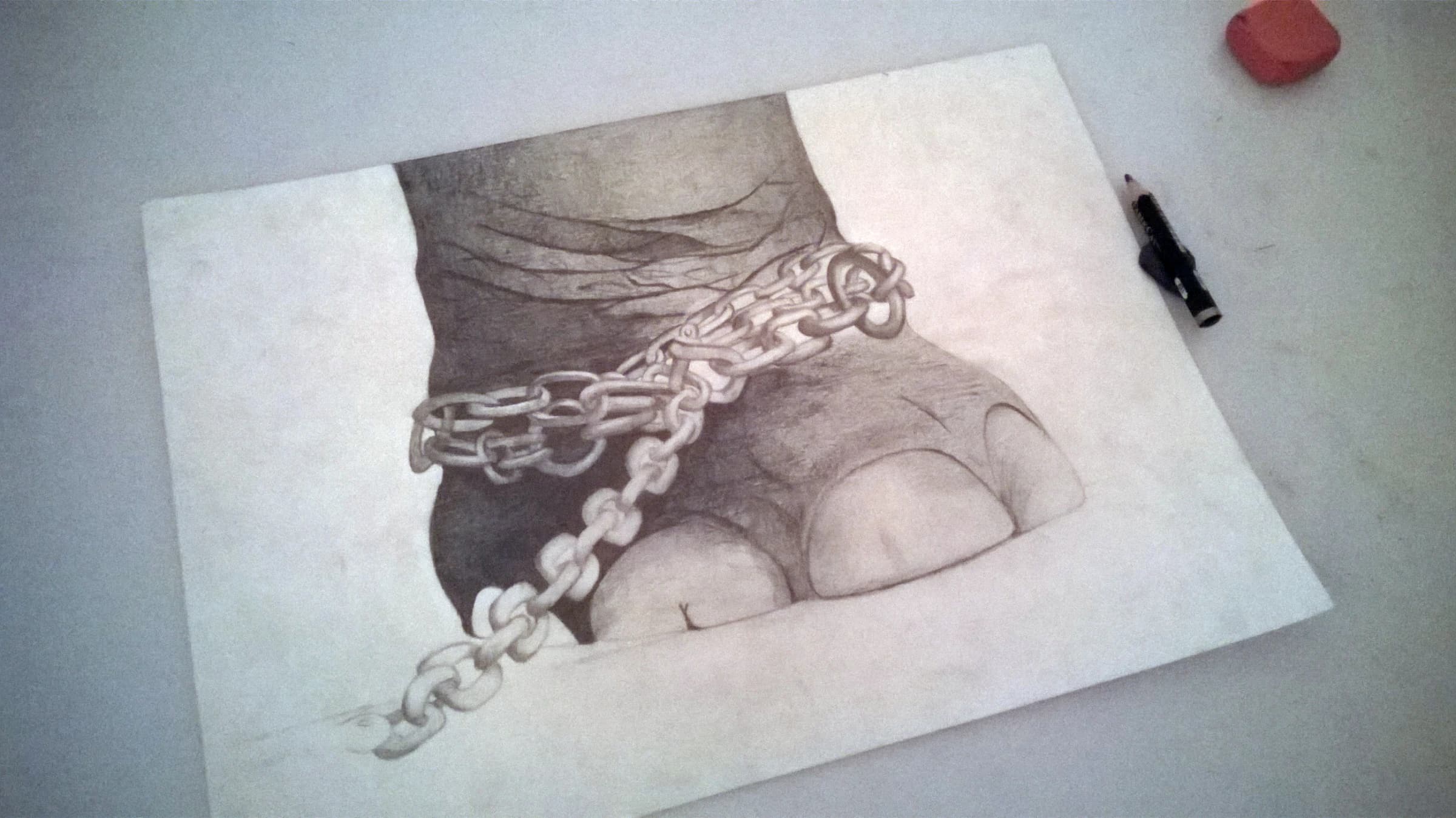
I drew every page freehand, pencil first and then the brush, and took the drawings into Photoshop afterward to bring out the feeling in them, keeping all the rough edges. I spent a long time on the pacing of the thirty-two pages, because I wanted the reader to feel the stake before anybody explained it to them, to arrive there on their own and only then find the words waiting. The book is in Spanish, the language Bucay wrote it in, and I wrote the text out by hand instead of setting it in a typeface, because a story this gentle should reach you the way a letter reaches you, in somebody’s handwriting, with all the unevenness that comes with it.
Project
- Client
- Artist’s book
- Industry
- Publishing
- Services
- Illustration · Editorial
- Role
- Illustrator · book design and binding
- Year
- 2016
- Team
- Story by Jorge Bucay · illustration, hand-lettering and binding
In numbers
- 32pages, drawn freehand
- 10hand-bound copies in the world
- 7 yearslater, one copy reached Jorge Bucay
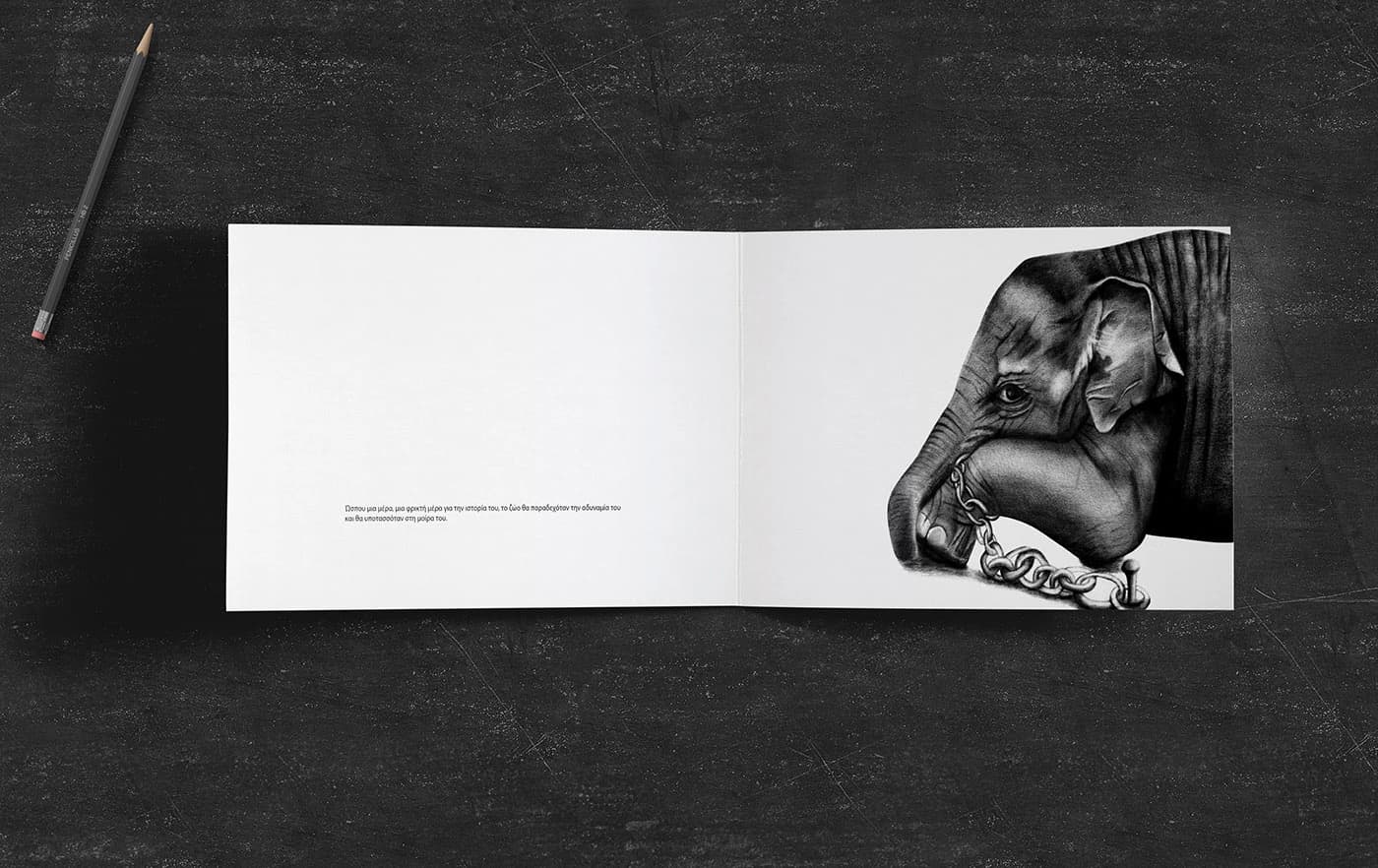
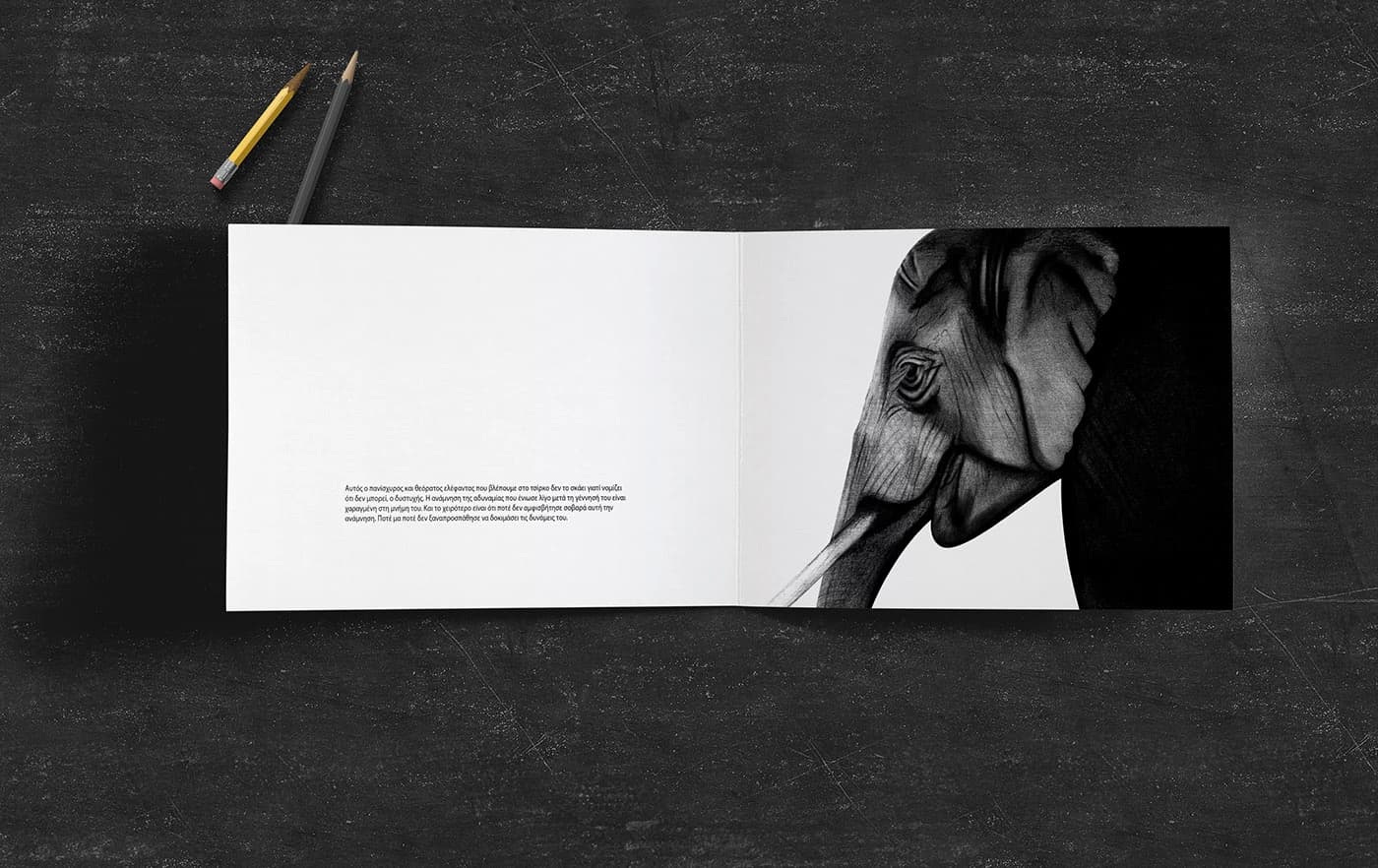
“The brushstrokes and the ink stains are there on purpose, and I left them exactly where they fell.”
The detail
They’re all the attempts and all the mistakes we make as we grow up, trying to put our wounds down and become something more than them, and I wanted them to stay visible on the page, because getting it wrong is part of everybody’s story and it’s how we learn. What the book asks in the end is only that we keep trying, because “no puedo, no puedo y nunca podré,” what the elephant believes about itself, is the one thing in the story that is not true.

In production
I drew it while I was working in Ljubljana, so the book was printed in Slovenia and I went to the printing house myself to choose the paper and stay for the run. The paper was so important here, because pencil and brushwork need a stock that keeps the grain and drinks the ink instead of flattening it, and that’s not something you can choose from a screen, you have to hold it in your hands and see what it does. The binding I did myself, sewn through the spine with red thread the way Chinese thread-bound books are put together, because I wanted every copy to have been touched all the way through by the person who made it. There are ten of them in the world, and there has never been an edition. The story belongs to Bucay, so this was always meant to be a small, handmade book and never a print run.
Production notes
- 01Thirty-two pages, drawn freehand in pencil and brush, finished in Photoshop
- 02Text hand-lettered in Spanish, the language the story was written in
- 03Brushstrokes and ink stains left visible on the page, on purpose
- 04Paper chosen in person at the printing house in Slovenia
- 05Sewn by hand with red thread, in the Chinese thread-binding manner
- 06Ten copies · Athens, November 2016
- 07Story by Jorge Bucay · the illustration and book design were done by me · no commercial edition
Since then
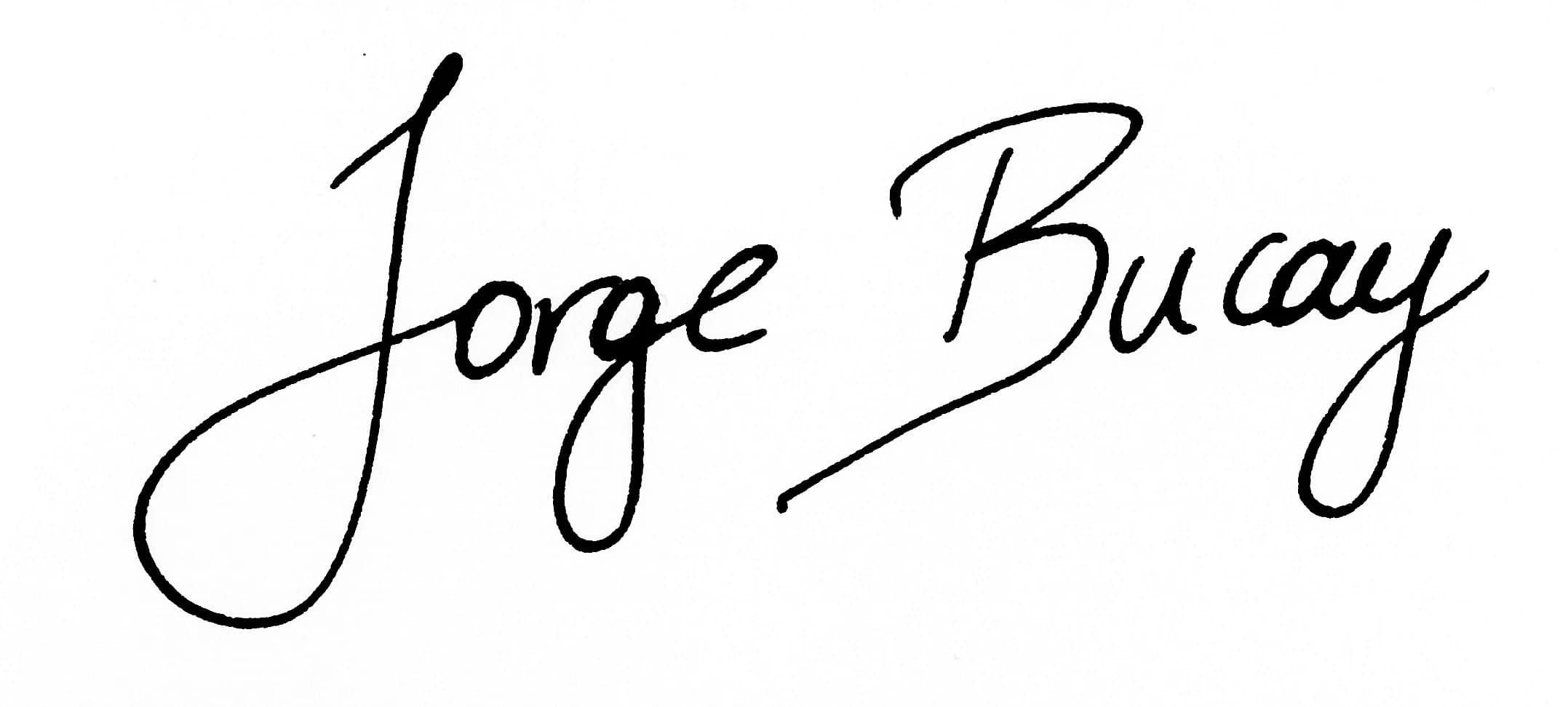
The book was finished in November 2016. Seven years later Jorge Bucay came to Athens to present a new book of his own at the Byzantine and Christian Museum, and I went with one of the ten copies under my arm and gave it to him. He liked it, he thanked me and he signed mine.
Credits
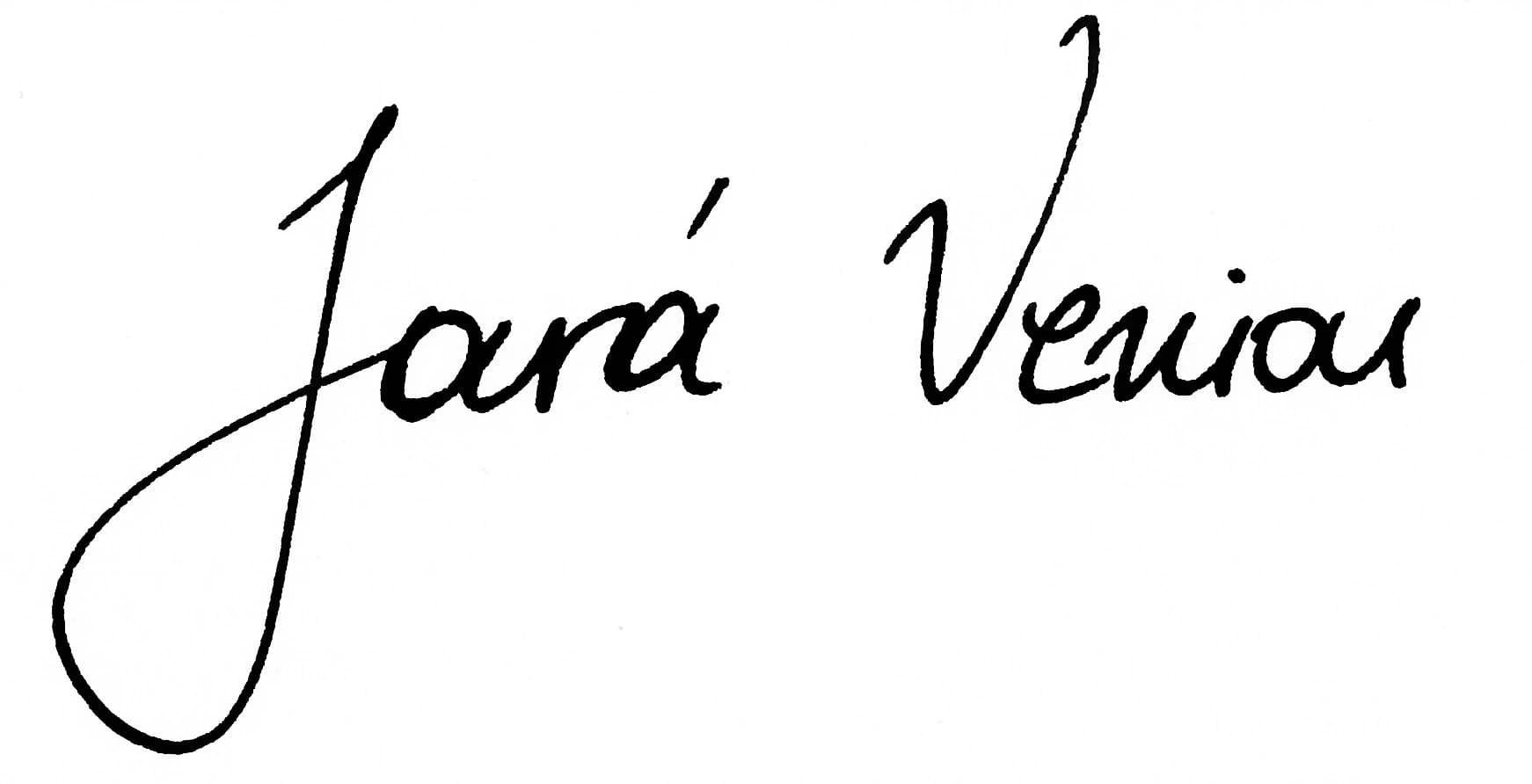
- Story © Jorge Bucay · Illustration, lettering and binding © Chara Veniou